Parmigiana di Zucchine
The summer parmigiana -- zucchini, tomato, mozzarella, made Sunday morning
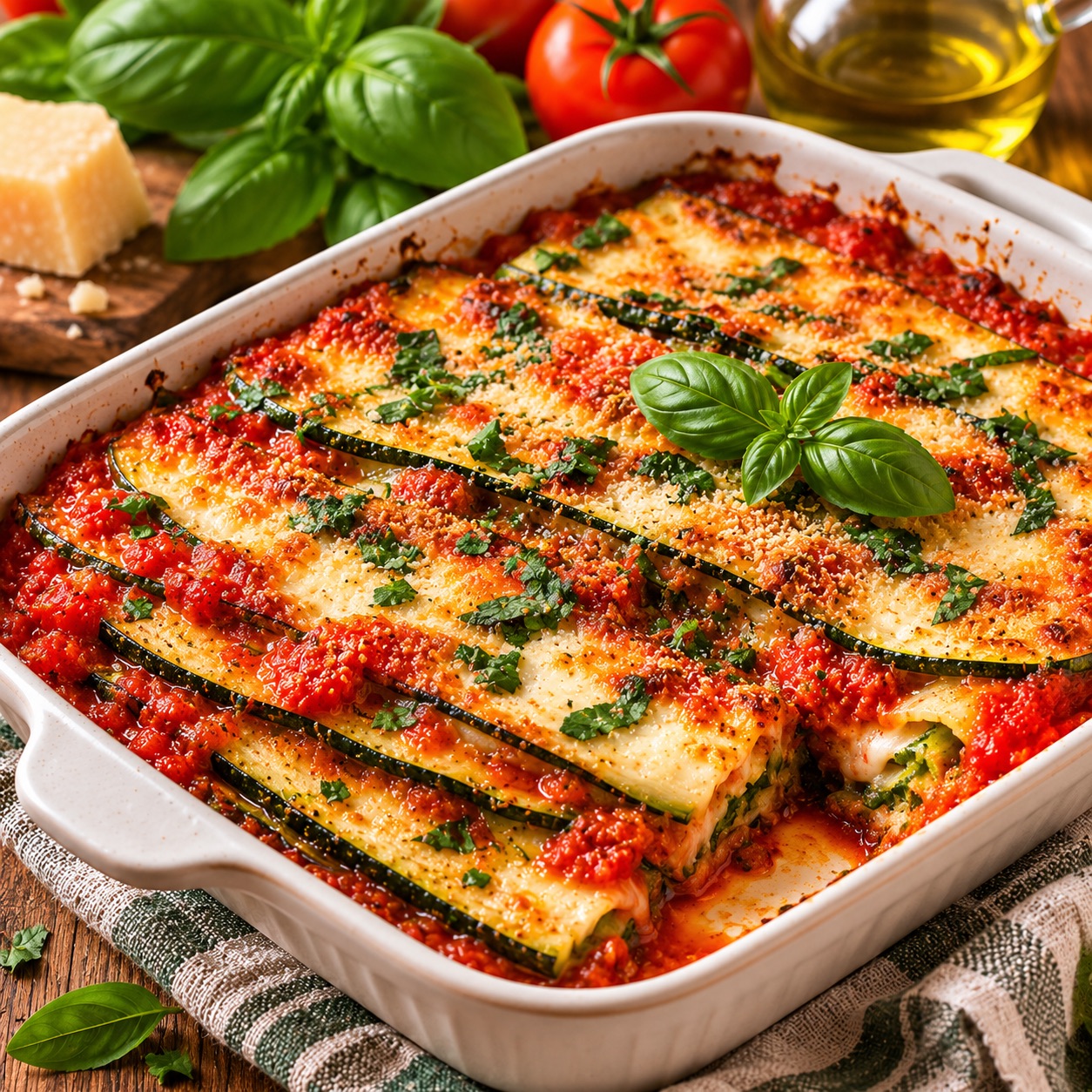
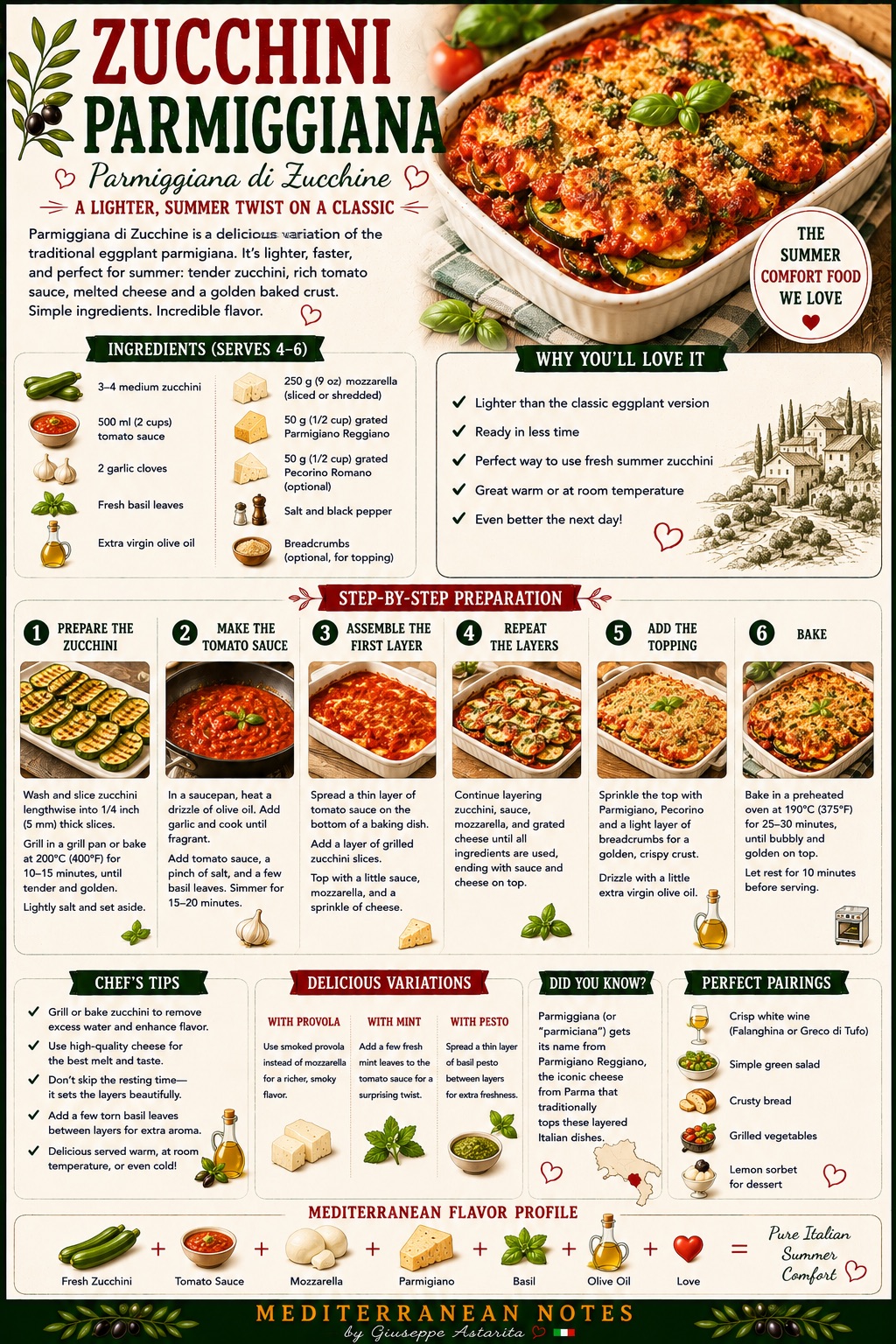
The parmigiana di zucchine is the summer version in my mother's three-parmigiana rotation -- the one she made when the zucchini were at the market in June and July, the same Sunday morning preparation alongside the Sunday lunch, the same Sunday evening service, the same Monday panino. It is lighter than the eggplant version -- zucchini has less structural density and more water content, producing a more delicate, fresher result -- and faster, because the zucchini does not require salting and pressing before use. Slice, grill or bake until golden, layer with tomato sauce and cheese. The whole assembly is simpler than the eggplant version and the result is its own thing entirely rather than a lesser approximation.
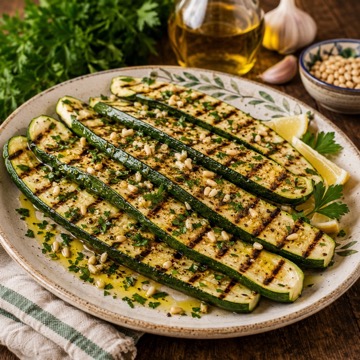
The key step that distinguishes a good parmigiana di zucchine from a mediocre one is grilling or roasting the zucchini before layering rather than using it raw. Raw zucchini in a parmigiana releases its considerable water content during baking and produces a watery, soft result that does not slice cleanly and does not have the flavor depth of pre-cooked zucchini. Grilled zucchini has lost some moisture, developed Maillard compounds on its surface, and concentrated its mild flavor before it even enters the baking dish. The layered result is firmer, more flavorful, and slices cleanly after resting. The resting is also not optional: ten to fifteen minutes minimum, the same logic as the artichoke parmigiana and all the others. My mother knew this and served accordingly.
The three parmigianas rotated on Sundays — eggplant, zucchini, artichoke, depending on the season and what was at the market. Not every Sunday the same one. My mother made whichever the season suggested: artichokes in spring, zucchini through the summer, eggplant most of the year. All three were made Sunday morning, alongside the Sunday ragù and everything else the kitchen produced before the big lunch. None of them appeared at lunch — Sunday lunch was pasta and meat. The parmigiana was for Sunday dinner, which was a lighter meal, the family still at the table but without the full production of noon. She brought it from the oven in the morning and left it to settle for hours; by evening it had set completely and you could cut it in clean slices. And the next morning — Monday — what was left went between two thick slices of pane casareccio or pane cafone. Not a sandwich with other things inside. Just the parmigiana between the bread, eaten at room temperature before school or work. This is the version I think about most often, more than the Sunday dinner version. The panino with the cold parmigiana from the day before. It was, without question, the best way to eat it.
Zucchini contains approximately 95% water by weight -- among the highest water content of any vegetable. When raw zucchini is layered in a baking dish and baked, this water is expelled as steam during cooking, pooling at the bottom of the dish and creating a liquid environment that prevents the Maillard browning of the surfaces, softens the mozzarella into a watery mass, and dilutes the tomato sauce. Pre-cooking the zucchini -- by grilling or roasting at 200C for 10-15 minutes -- expels approximately 30-40% of this water before assembly, allowing the assembled parmigiana to bake in a much drier environment where the cheese can melt properly without becoming watery and the layers can set into sliceable firmness during the rest period. The Maillard compounds developed on the pre-cooked zucchini surface also add a caramelized, nutty depth to the finished dish that raw zucchini cannot provide.
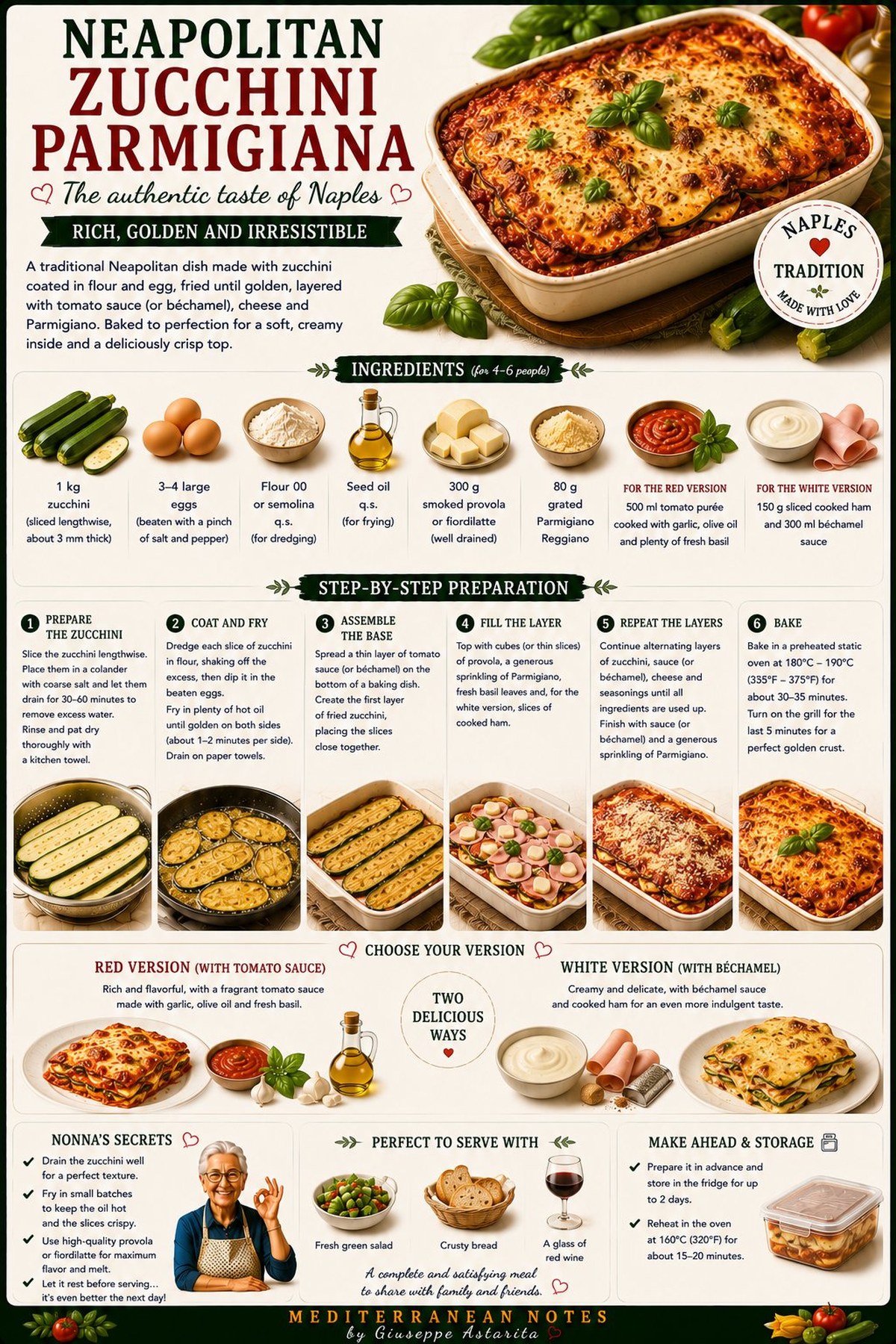
The recipe
Buon appetito.