Parmigiana di Melanzane Fredda
No oven, all fresh — the cold summer version of a classic
Not the baked parmigiana — this is the summer version. Grilled eggplant, cooled completely, layered cold with fresh sliced tomatoes, raw mozzarella, torn basil, and a drizzle of olive oil. Like a caprese, but layered and more substantial. My neighbor Letizia used to make this. She shared it with us once at the beach house and I have thought about it since.
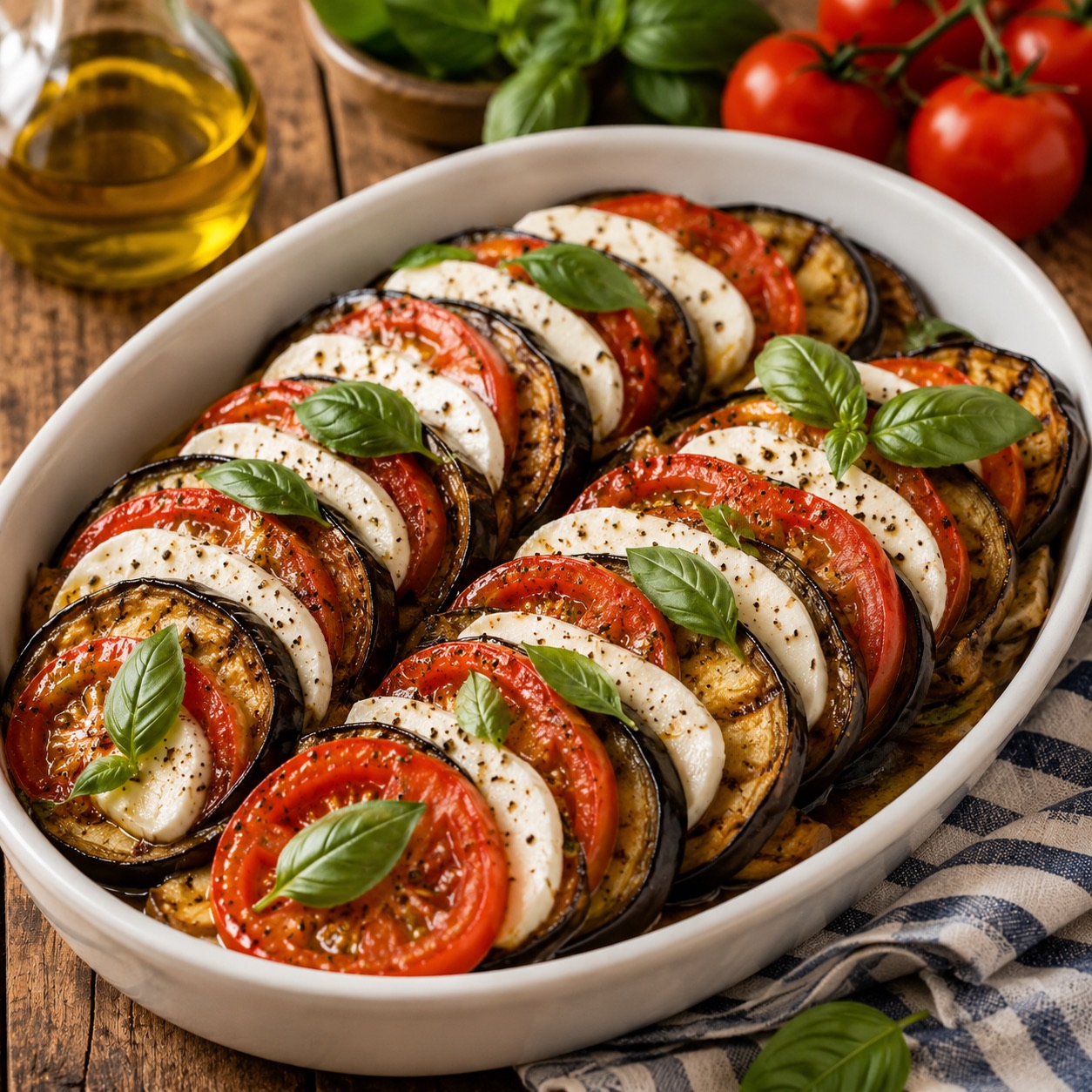
Letizia lived next door on Via Mazzini in Caserta. She was one of those neighbors who cooked with the particular fluency of someone who has never thought of cooking as something requiring effort — it was simply the medium through which the day was organized. She made things that her family ate and occasionally things that ended up shared with the people nearby, which was how the cold parmigiana di melanzane first arrived in our lives. She had made it for her family, there was extra, and she brought a dish of it to the beach house one summer afternoon. It was cold, it smelled of grilled eggplant and basil, and it was exactly the right thing to eat at that temperature and at that hour.
The cold parmigiana is not the parmigiana. The baked parmigiana — the classic Neapolitan version with fried eggplant, cooked tomato sauce, fior di latte, and basil, layered and baked until everything melts together — is a serious preparation that requires the oven and considerable time and produces something rich and substantial that belongs to the cool months or to a Sunday lunch when cooking is the day's project. The cold parmigiana is its summer alter ego: grilled rather than fried, raw tomatoes rather than cooked sauce, fresh mozzarella rather than melted fior di latte, assembled and refrigerated rather than baked. The eggplant gets its smoke from the grill instead of its richness from frying. Everything is lighter, fresher, and entirely suited to being eaten cold from the refrigerator on a hot afternoon.
The relationship to the caprese is real — the infographic notes it and it is accurate. Both involve tomato, mozzarella, basil, and olive oil. The addition of grilled eggplant changes the character substantially: the eggplant adds smoky depth, a dense texture between the layers, and a vegetable presence that makes the dish a proper secondo rather than an antipasto. It is more satisfying than a caprese and more refreshing than a baked parmigiana. It occupies a specific position in the summer kitchen that neither the caprese nor the baked version quite covers.
The two rules that matter: the eggplant must be grilled, not fried, and it must cool completely before assembly. Fried eggplant adds oil and richness that transforms the dish into something heavier and less suitable for eating cold — the cold oil in the layers congeals slightly in the refrigerator and the texture becomes dense rather than fresh. Grilled eggplant keeps its structure, has a smoky quality that functions well cold, and releases no excess oil into the layers. Cooling it completely before layering is equally important — warm eggplant placed against fresh mozzarella begins to melt and weep moisture into the cheese, the layers lose their definition, and the assembly becomes a blurred version of what it should be. Cool the eggplant on a plate in a single layer, salt it lightly, let it sit until fully at room temperature, then refrigerate it for thirty minutes before layering. The rest of the assembly takes five minutes and requires no heat at all.
Eggplant (Solanum melongena) has a sponge-like cellular structure with large air-filled intercellular spaces that collapse during cooking, creating the characteristic soft texture. When fried, the eggplant absorbs large quantities of oil — up to 30–40% of its weight — into these collapsed spaces before the surface proteins coagulate and seal the exterior. This oil remains liquid at room temperature but begins to congeal when chilled, giving cold fried eggplant an unpleasant, heavy texture. When grilled over dry heat, the surface Maillard reactions produce smoky aromatic compounds (primarily pyrazines and furans from the charring of the skin) while the interior softens through steam produced by the eggplant's own moisture — around 92% of eggplant by weight is water. Because no oil is absorbed during grilling, the cold eggplant retains a clean texture without the congealing problem. The mandatory draining of the mozzarella addresses a different problem: fresh mozzarella contains approximately 50–55% moisture, much of it as free whey (the liquid that separates from the curds during storage). If this free whey is not removed before assembly, it drains into the lower layers of the dish during refrigeration, softening the eggplant and diluting the olive oil into an unpleasant watery puddle at the bottom. Draining the mozzarella in a colander for 30 minutes removes most of this free whey while leaving the moisture bound within the cheese matrix — the mozzarella remains creamy and fresh but does not weep into the dish.
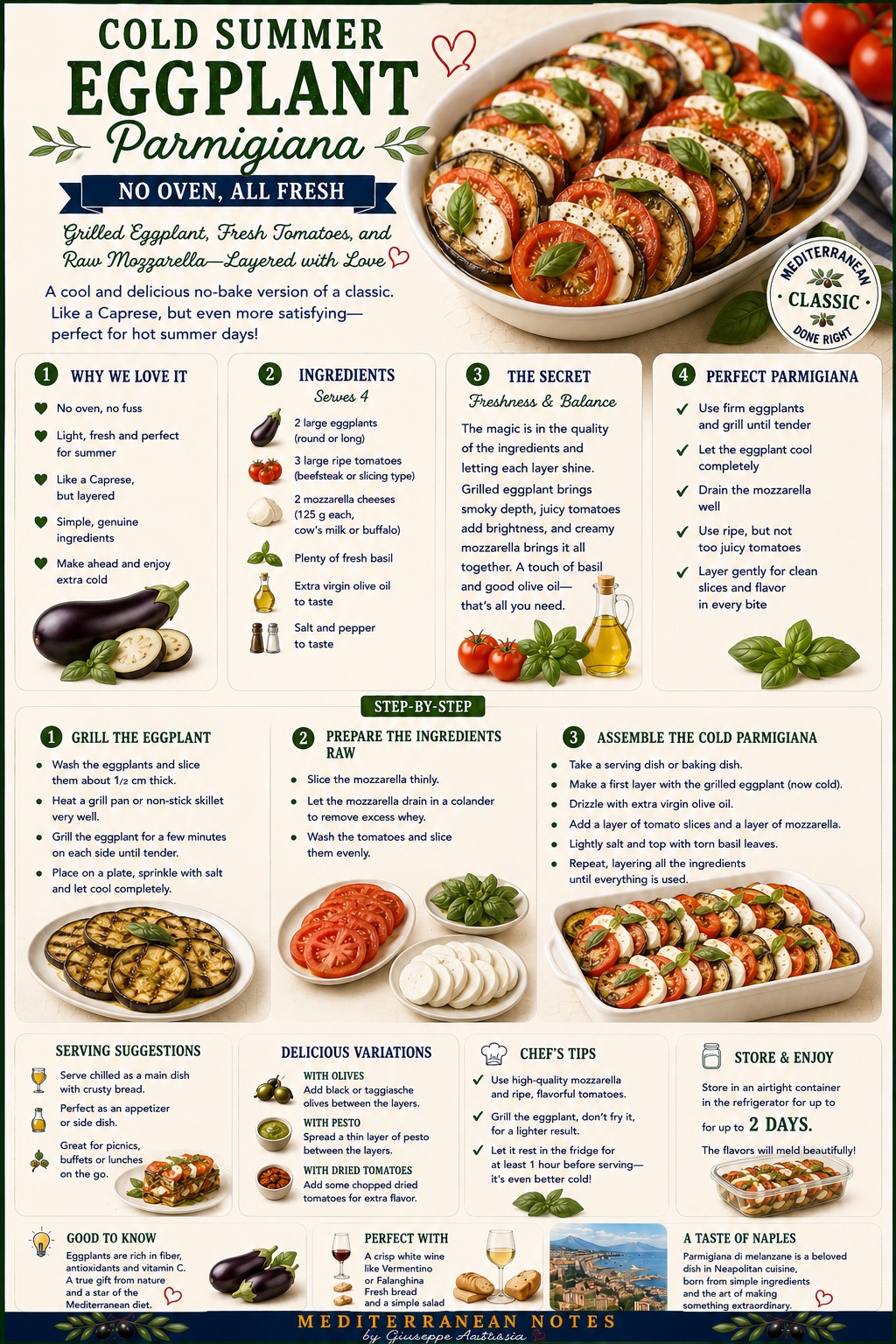
La ricetta
Varianti
I make this in Massachusetts in August when the local eggplant is good and the tomatoes from the farmers' market are properly ripe. The buffalo mozzarella imported from Campania is available at the Italian grocery in Boston when I plan ahead. On the days when everything is right — the eggplant properly grilled and cold, the tomatoes at exactly the right point, the mozzarella fresh — it is very close to what I ate from Letizia's dish at the beach. Some things reconstruct better than others across the distance.
Buon appetito — servila fredda, almeno un'ora in frigorifero.