Pane Cotto
My father's poorest, most loved dish
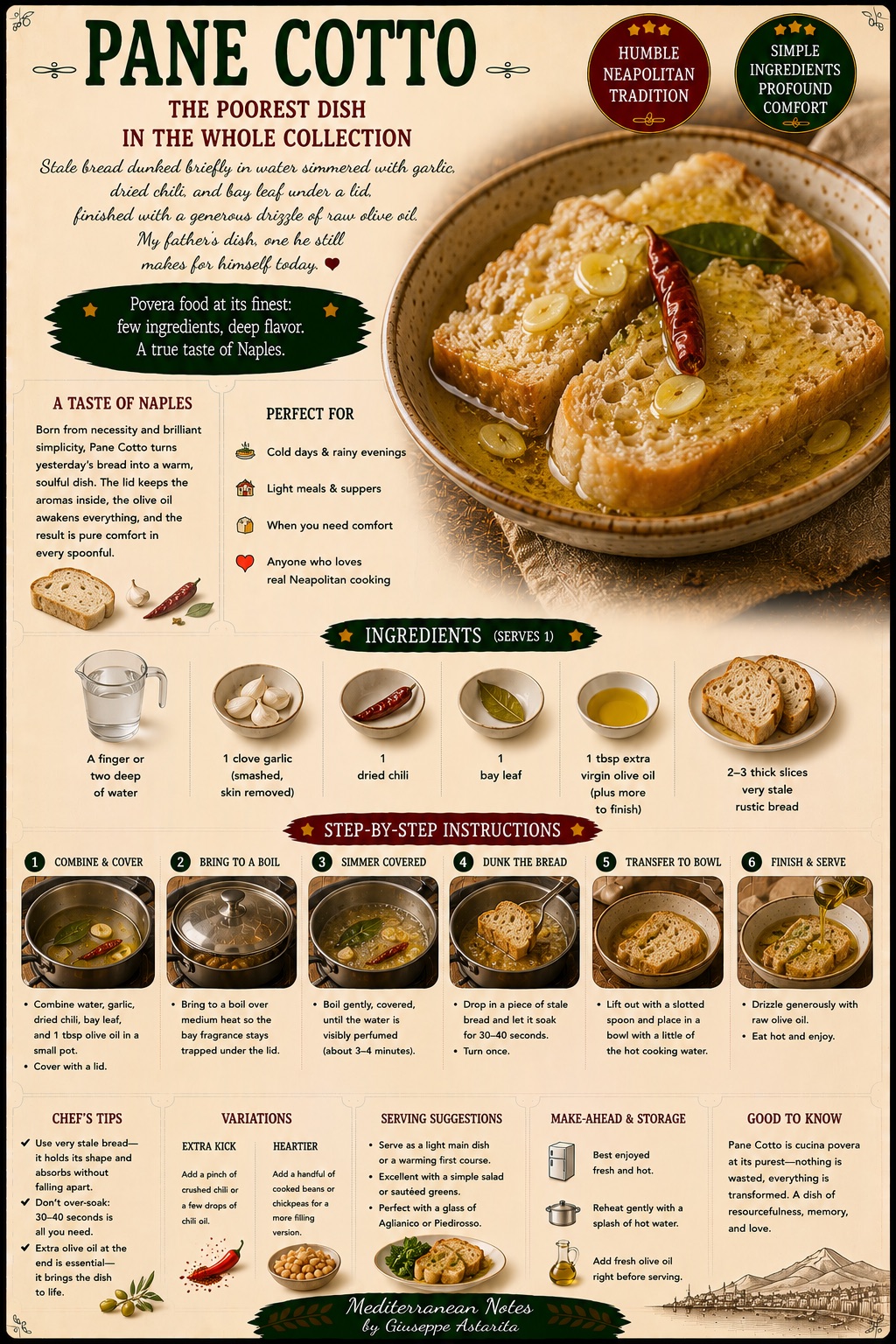
Water, garlic, chili, and bay leaf, simmered under a lid until the kitchen smells like all three at once. Very stale bread, dunked in for less than a minute. A drizzle of raw oil at the end. That's the whole dish, and my father still makes it for himself, decades after it stopped being the only thing in the house.
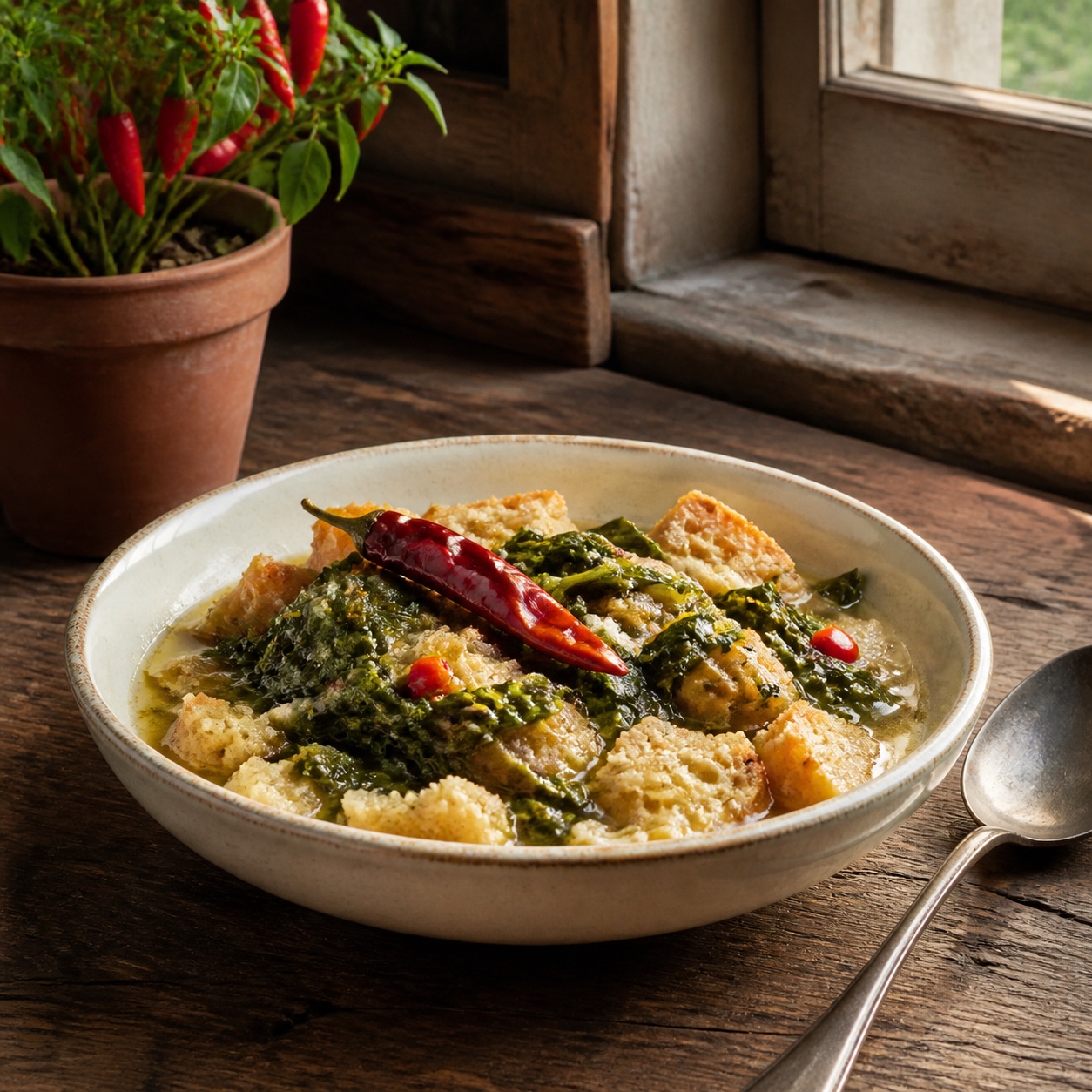
I asked my father once what he remembered eating as a child. Of everything he listed — and there was a lot — this is the one he came back to first, and the one he still makes for himself now that he's grown. Pane cotto, cooked bread, is about as close to nothing as a dish can be and still be a dish: water, a few aromatics, and bread too stale to eat any other way.
The method is exact, in the way that dishes with almost no ingredients tend to become exact — there's nothing to hide an error behind. A smashed garlic clove with the skin removed, a chili, a bay leaf, and a thread of olive oil go into water that's brought to a boil covered, specifically so the bay leaf's fragrance stays in the pot instead of escaping into the room. Once it's boiled long enough that the water is visibly perfumed by all three, in goes the bread — very stale bread, cut into pieces — for no more than thirty or forty seconds. Out it comes, plated with a little of that same cooking water, and finished with a drizzle of raw, uncooked olive oil poured directly over the top along with a spoonful of the hot water.
It isn't a soup and it isn't quite bread, either — the bread barely has time to soften all the way through before it comes back out, so what's left has a soft, saturated middle and a surface that's still faintly holding its shape. The raw oil poured on at the end is what makes it taste finished rather than merely warm: it sits on top rather than cooking into anything, so you get the full, uncooked flavor of good olive oil on the first bite.
The recipe
For one, generously — scale up the water and bread together for more.
Related
Buon appetito.