Paccheri al Ragu di Mare
The large tube pasta with mixed seafood ragu -- the taste of the Neapolitan coast
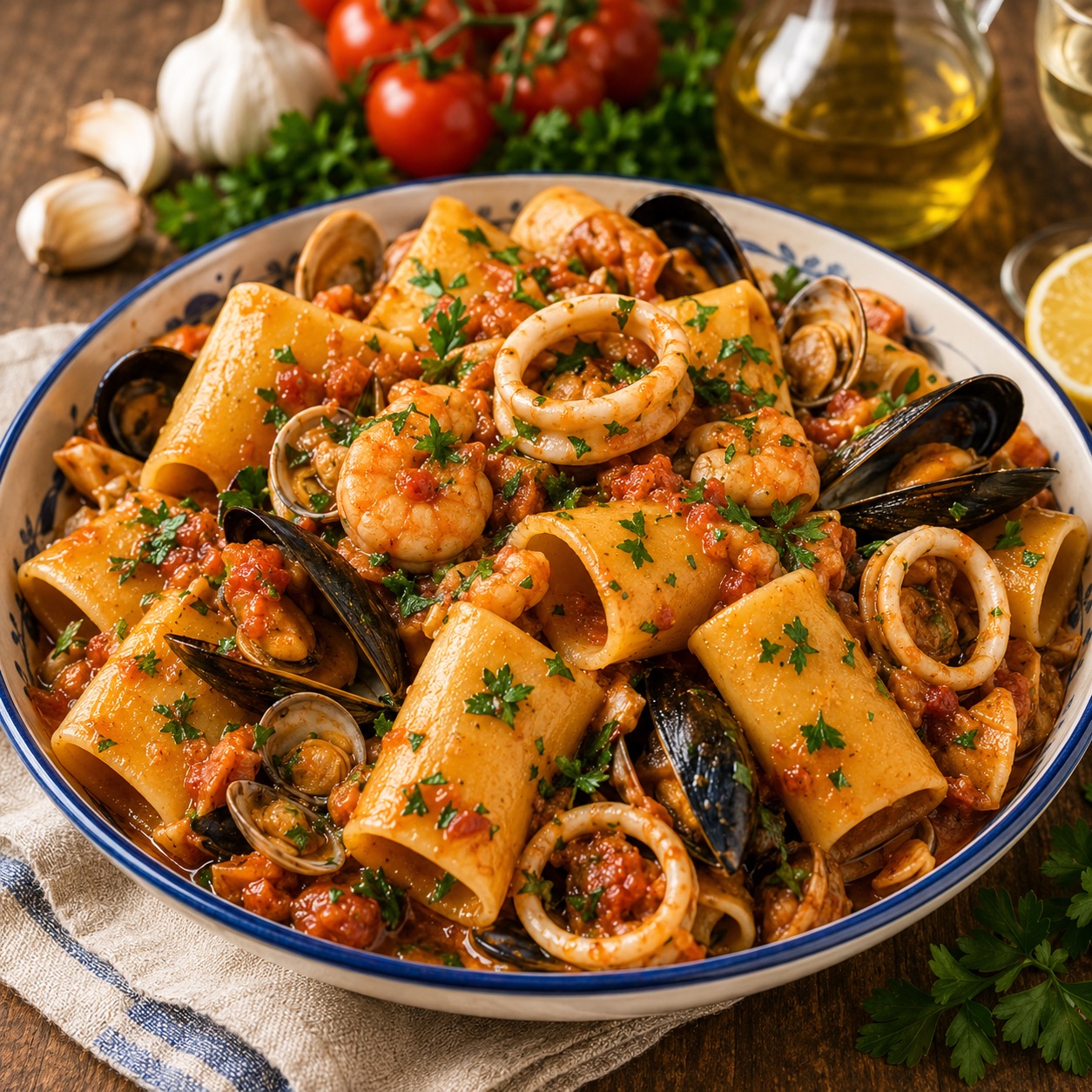
The paccheri is the right pasta for a seafood ragu because it is large enough to hold the sauce rather than simply being coated by it. Each tube traps a portion of the ragu inside as well as carrying it on the outside, so that every bite contains both pasta and a concentrated spoonful of the mixed seafood sauce. The shape is also structurally impressive -- a bowl of paccheri al ragu di mare, the large tubes visible among the mussels and shrimp and calamari, looks like what it is: a serious seafood pasta from a serious seafood tradition.
The ragu di mare is not a single recipe with fixed ingredients but a principle: mixed seafood -- whatever is freshest at the market -- cooked briefly with tomato, garlic, white wine, and olive oil into a sauce that is rich without being heavy, and that tastes of the sea without tasting of nothing else. The most important instruction is to not overcook the seafood. Shrimp and calamari are done in two to three minutes; mussels and clams open in another three or four. They go into the sauce at different stages and are kept just barely past the moment of doneness. Overcooked seafood in a ragu di mare is rubbery and flat and loses the sweetness that makes the dish worth making.
Pasta shape and sauce compatibility is a function of surface area, porosity, and the physical capacity of the shape to trap sauce. Paccheri, with its large hollow tube and ridged exterior (rigate version), captures sauce through three mechanisms: the interior of the tube traps liquid sauce directly; the ridges on the exterior increase surface area and mechanical grip on chunky sauce components; and the pasta water starch coating on the pasta surface after cooking forms a film that helps sauce adhere rather than sliding off. Smooth, thin pasta shapes like spaghetti rely primarily on the starch coating for sauce adhesion, which is why they work best with lighter, emulsified sauces. Large tube shapes like paccheri work best with chunky ragus where the sauce components are large enough to be captured inside the tube.
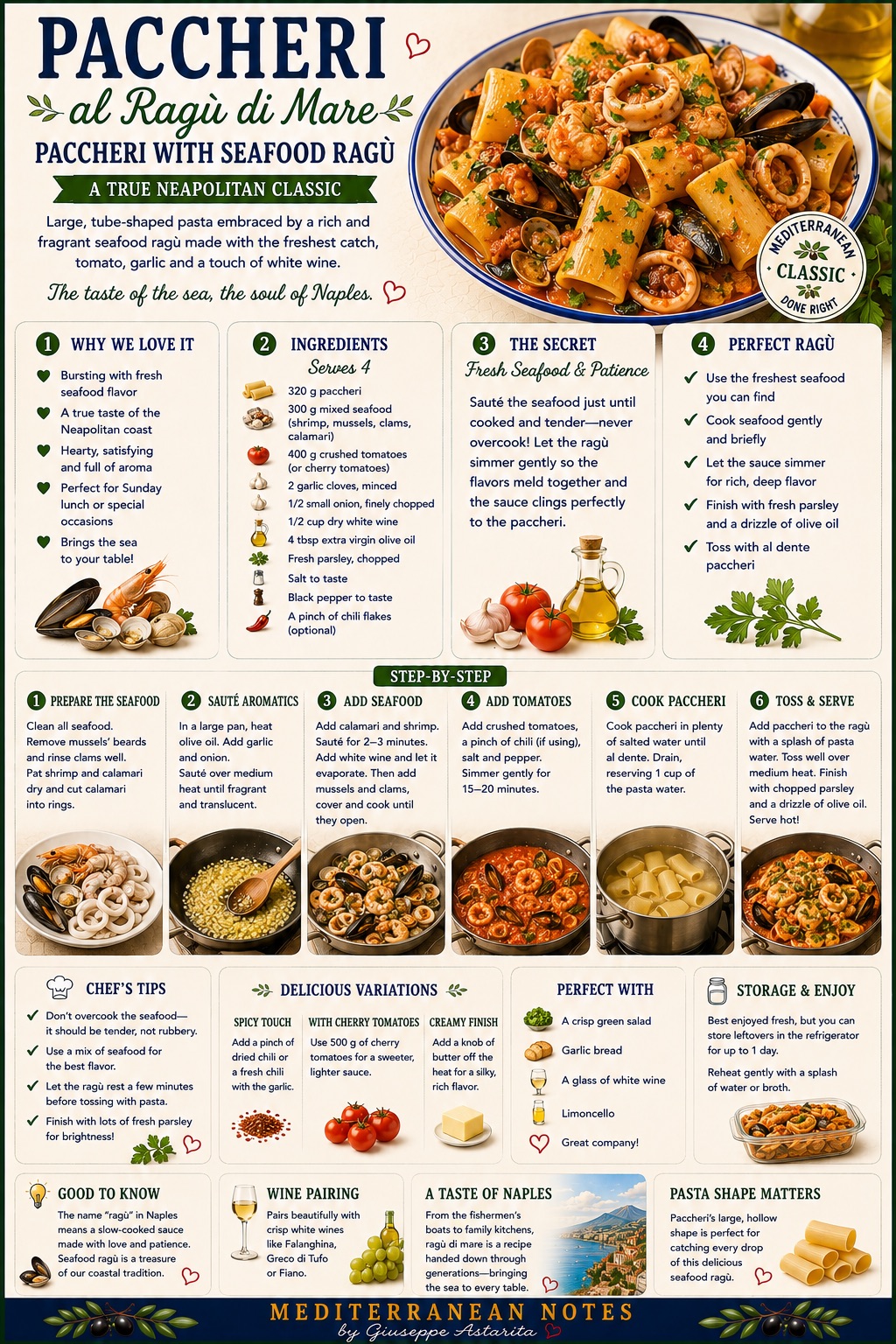
The recipe
Buon appetito.