Pasta con Gamberi e Zucchine
Shrimp and zucchini pasta -- light, fresh, Mediterranean summer
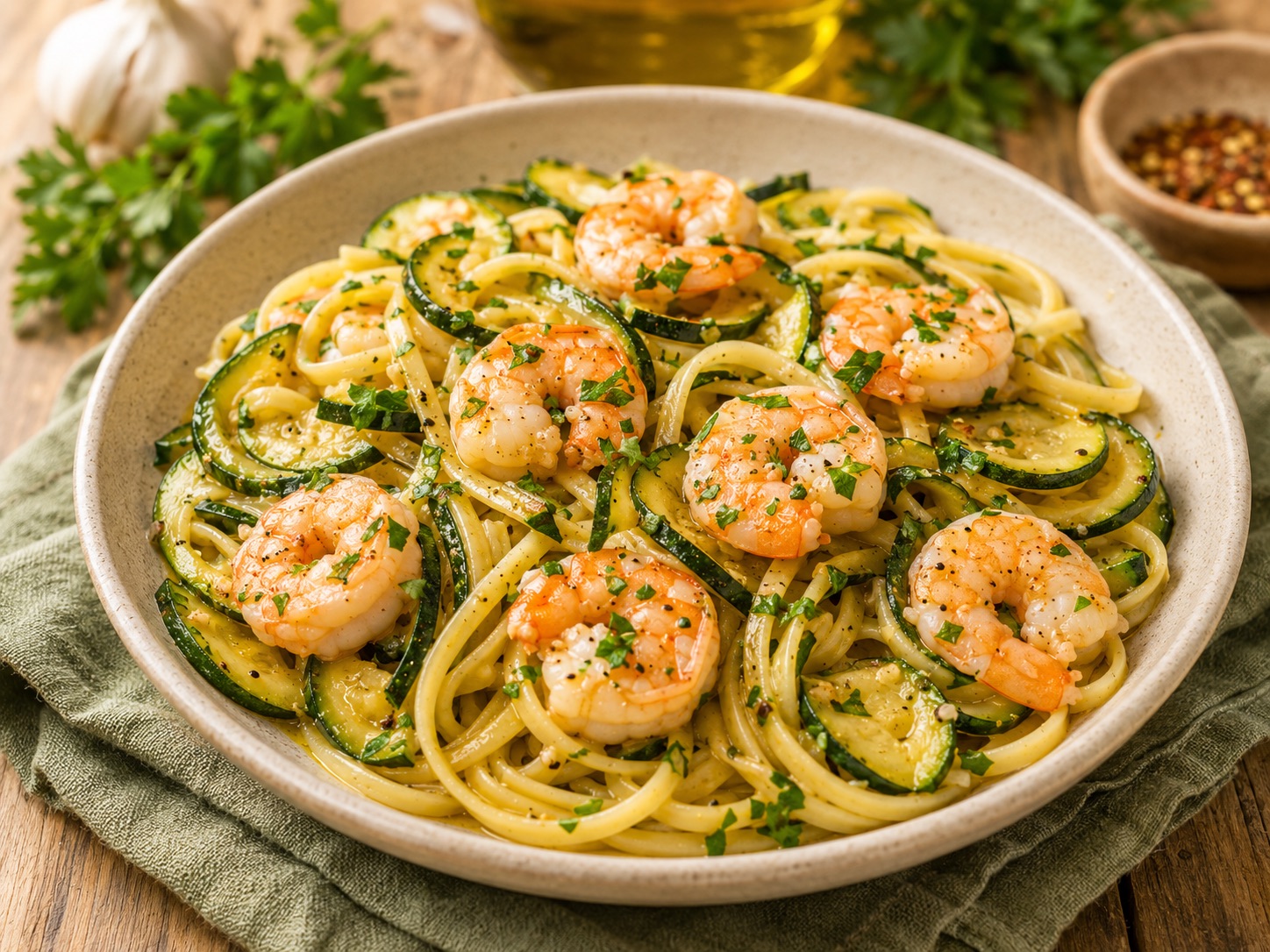
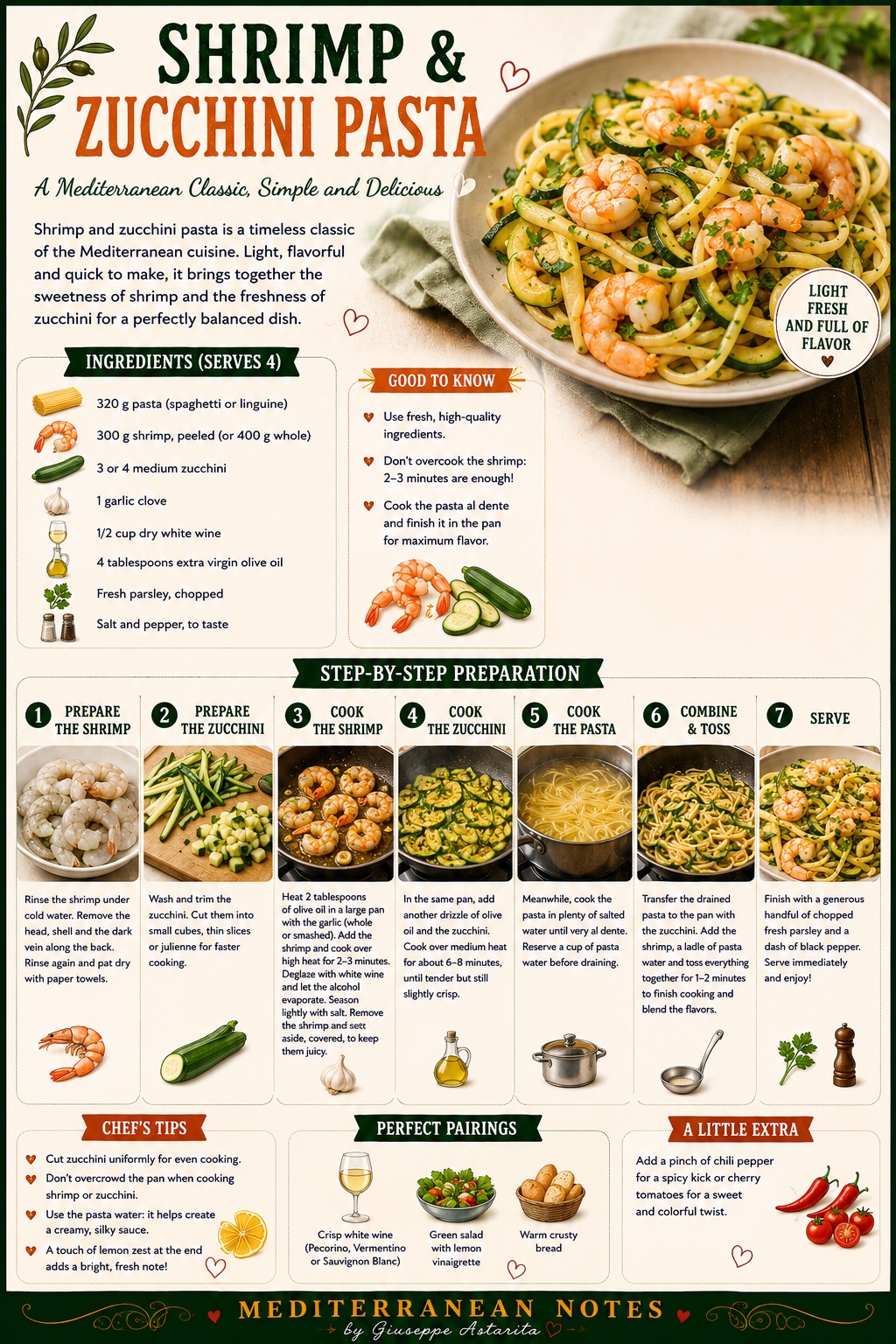
Shrimp and zucchini pasta belongs to the category of dishes that exist because summer produces an abundance of both ingredients at the same time and the combination works. The sweetness of fresh shrimp and the mild, slightly watery freshness of good summer zucchini are natural partners: neither dominates the other, and both benefit from the same cooking approach of high heat, brief time, and good olive oil. The result is a light pasta that tastes of the sea and the garden simultaneously, which is exactly what a summer lunch on the Italian coast should taste like.
The technique has two key requirements. First, the shrimp must not be overcooked — 2 to 3 minutes total is enough for medium shrimp, and they continue to carry residual heat after leaving the pan. A shrimp that has been cooked past pink-and-firm becomes rubbery and loses the natural sweetness that makes it worth using. Remove them from the pan the moment they are opaque and pink throughout, set them aside covered, and return them to the pasta only at the final toss. Second, the zucchini should have some texture remaining — not raw, but not collapsed. Six to eight minutes over medium heat in olive oil produces zucchini that is tender but still holds its shape when tossed with the pasta, which is the correct result.
The white wine deglaze after the shrimp is not decoration: the fond left by the shrimp in the pan contains concentrated flavor compounds and some proteins that dissolve into the wine and become part of the sauce. A splash of pasta water added during the final toss emulsifies the olive oil and the pan juices into a light, silky coating that is technically a sauce, even though nothing that looks like a sauce was made. This is the standard approach for light pasta dishes without a discrete sauce component, and it works here as well as it works in aglio e olio or the puveriello.
Raw shrimp are grey-translucent because their shell and flesh contain astaxanthin -- a carotenoid pigment -- bound to a protein called crustacyanin. When heat denatures the crustacyanin protein, astaxanthin is released and its characteristic orange-red color becomes visible, producing the pink color of cooked shrimp. Simultaneously, the muscle proteins in the shrimp flesh denature and contract, producing the firm texture of cooked shrimp. Both processes happen quickly at temperatures above 60 degrees C. Continued heating beyond this point causes further protein contraction, squeezing out moisture and producing the rubbery texture of overcooked shrimp -- which is irreversible. The correct moment to remove shrimp from heat is exactly when the color transition completes throughout.
Pasta water is starchy, not simply salty water: it contains dissolved starch released by the pasta during cooking, at a concentration of roughly 1-2% after the pasta has been cooking for several minutes. When added to a pan with olive oil and pan juices, this starchy water acts as an emulsifier -- the starch molecules associate with both the water-soluble components of the juices and the fat droplets of the olive oil, creating a stable emulsion that coats the pasta evenly rather than sitting on top of it. This is the scientific basis of the Italian instruction to always reserve pasta water before draining.
The recipe
Serves 4. Work quickly -- both shrimp and zucchini are damaged by excess time on heat. Have everything prepared before the pasta goes into the water.
Buon appetito.