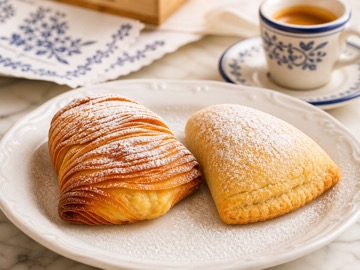
Cornetto Napoletano
The Neapolitan morning croissant -- softer, sweeter, always with a caffe
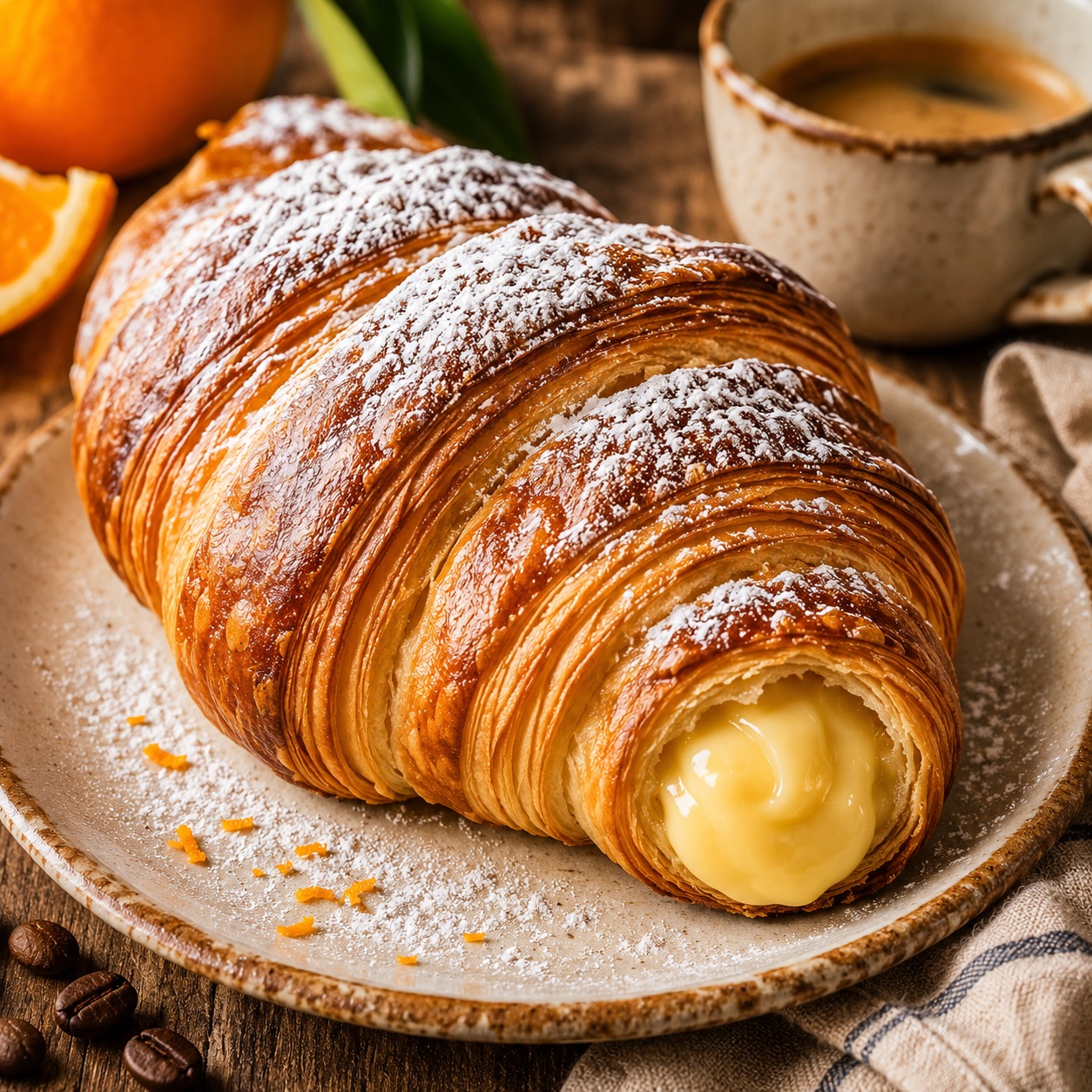
The Neapolitan morning begins with a cornetto and a caffe. Not in sequence and not separately -- together, the cornetto dunked briefly into the espresso or bitten alongside it, alternating, the richness of the laminated dough and the sweet filling against the sharp, bitter coffee. This is not a preference or a tradition that can be approximated; it is a specific experience that requires the cornetto to be genuinely fresh -- made that morning, still slightly warm, its butter-layered exterior still crisp -- and the espresso to be a Neapolitan espresso, concentrated and brief. The combination defines the Neapolitan morning in a way that nothing else does, and it is the first thing any Neapolitan returning from abroad looks for upon arriving home.
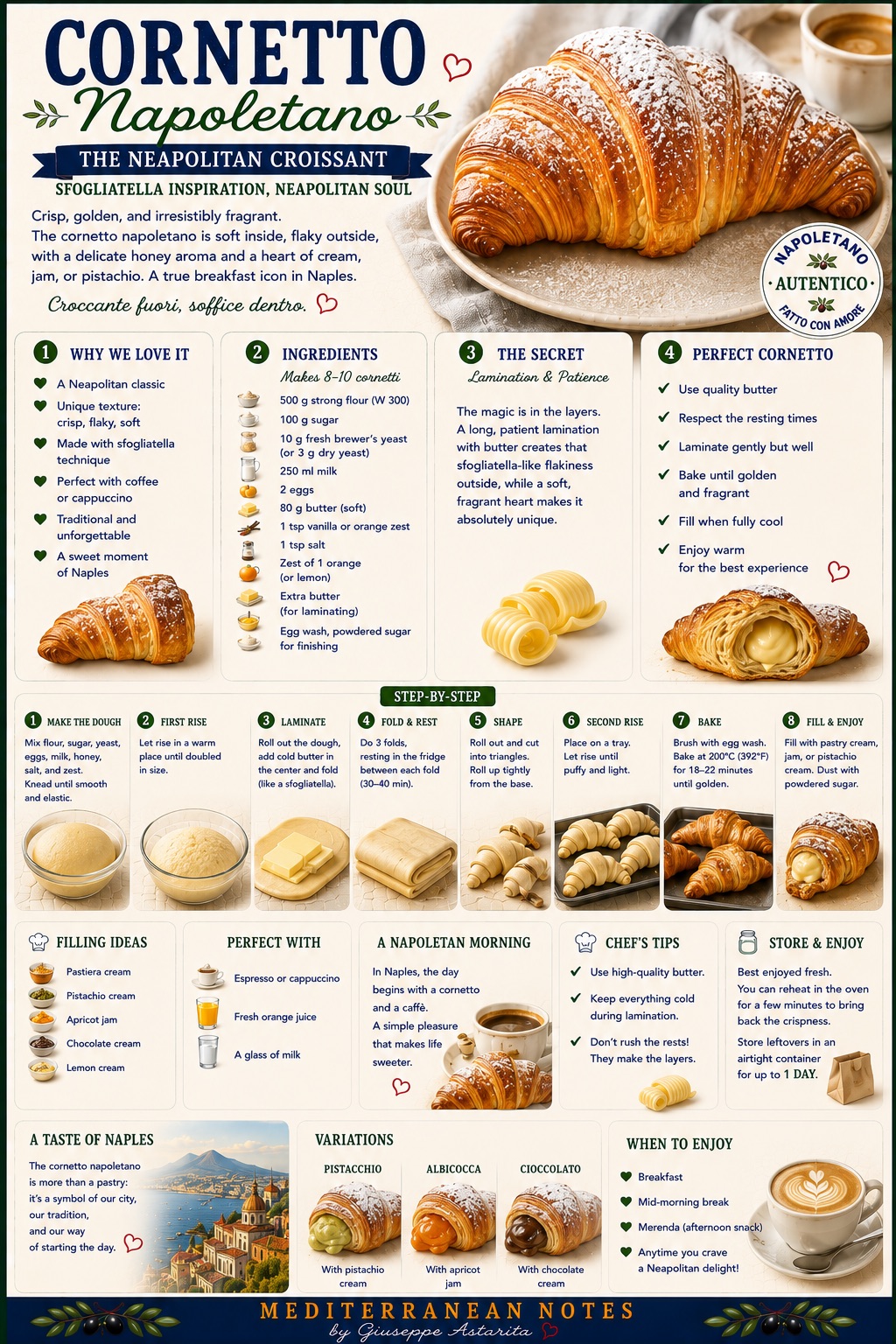
The cornetto napoletano is distinct from the French croissant -- its relative and obvious ancestor -- in several ways. It is softer inside, sweeter, and more yielding than the pure-butter French version, with a more pronounced honey and citrus aroma from the orange or lemon zest in the dough. The lamination technique is the same: cold butter folded into the dough in multiple turns, resting between folds, producing the layered structure that gives both pastries their characteristic flakiness. But the Neapolitan dough has more sugar and eggs, producing a richer, more tender interior that is less concerned with pure butter flavor and more interested in sweetness and fragrance. The fillings -- pastry cream, pistachio, apricot jam, chocolate -- are not afterthoughts but central to the experience; an unfilled cornetto is called semplice and is the choice of those who prefer the dough itself over the contrast with a filling.
Lamination is the process of folding cold butter into a yeast dough in multiple turns, creating alternating layers of dough and butter. When the laminated pastry bakes, the water in the butter (approximately 15-20% of butter by weight) vaporizes rapidly and creates steam that forces the dough layers apart, producing the characteristic layered, flaky structure. For this to work, the butter must remain in distinct layers rather than being absorbed into the dough -- which requires the butter to remain cold and solid throughout the lamination process. Each fold must be followed by a rest period in the refrigerator (30-40 minutes) to re-solidify the butter and relax the gluten. Skipping these rests allows the gluten to spring back during rolling, tears the butter layers, and produces a pastry that is doughy rather than flaky. The number of folds determines the number of layers: three folds of three produces 27 layers; the resulting structure multiplies geometrically with each turn.
The recipe
Makes 8-10 cornetti. A two-day project: make the dough and do the lamination on day one, shape and bake on day two. Do not rush the resting times -- they are the technique.
Buon appetito -- e buon caffe.