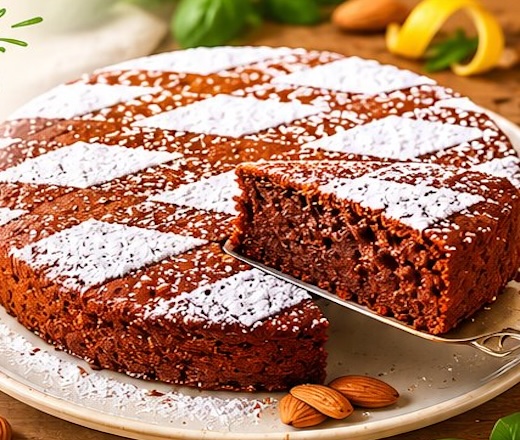
Cioccolata Calda Americana
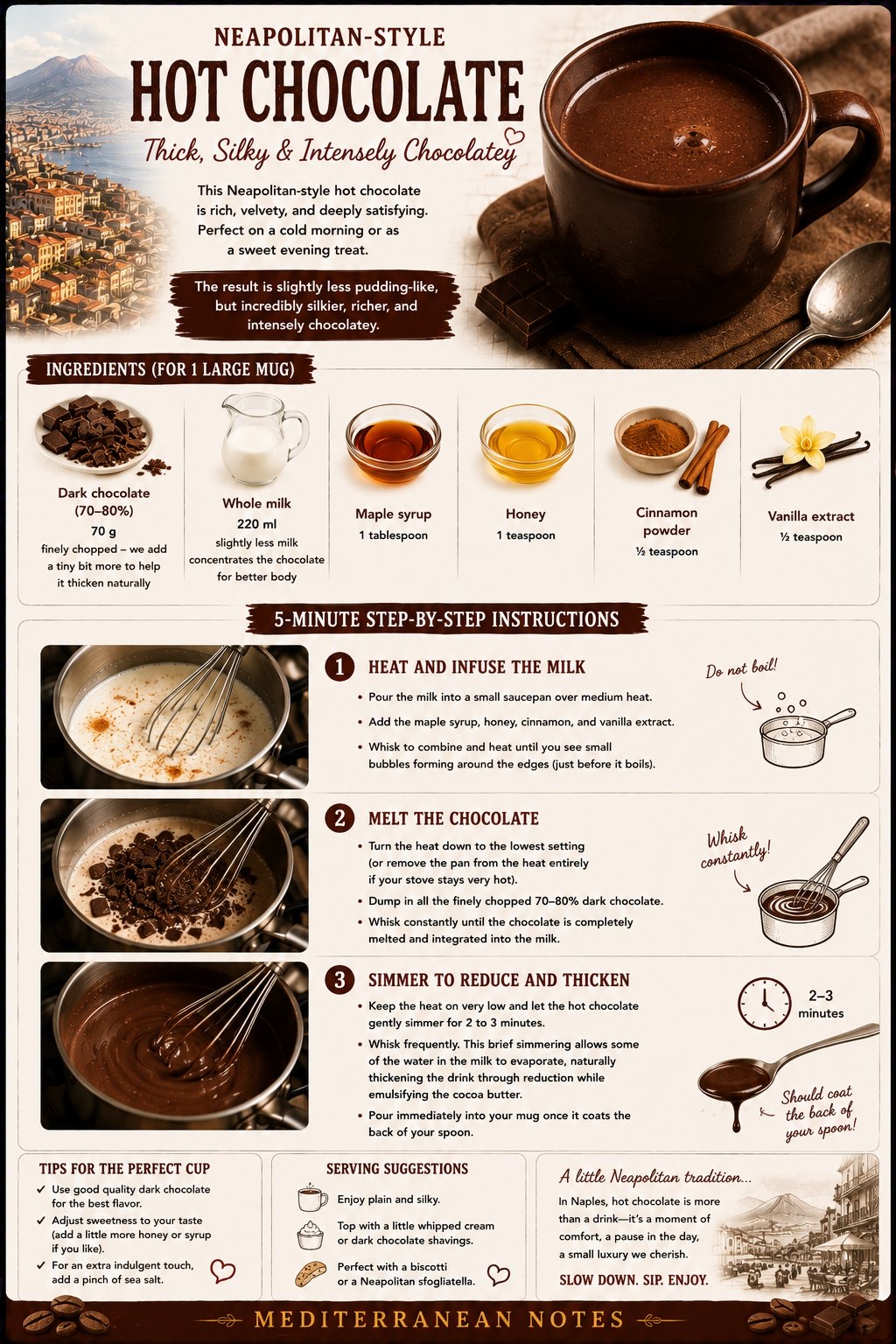
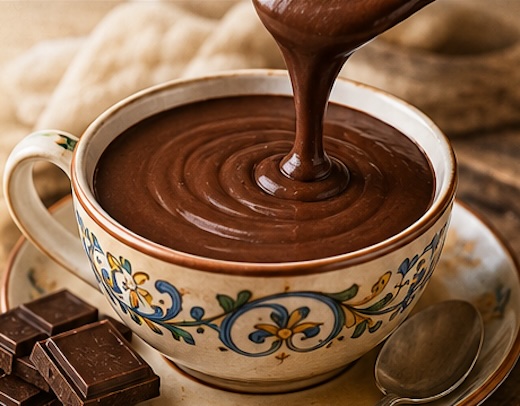
The Neapolitan hot chocolate, after the ocean crossing. Maple syrup instead of sugar, honey, vanilla, a more generous hand with the cinnamon. Still dark, still thick, still for birthdays and name days — but this is what the tradition became when it settled in a new place.
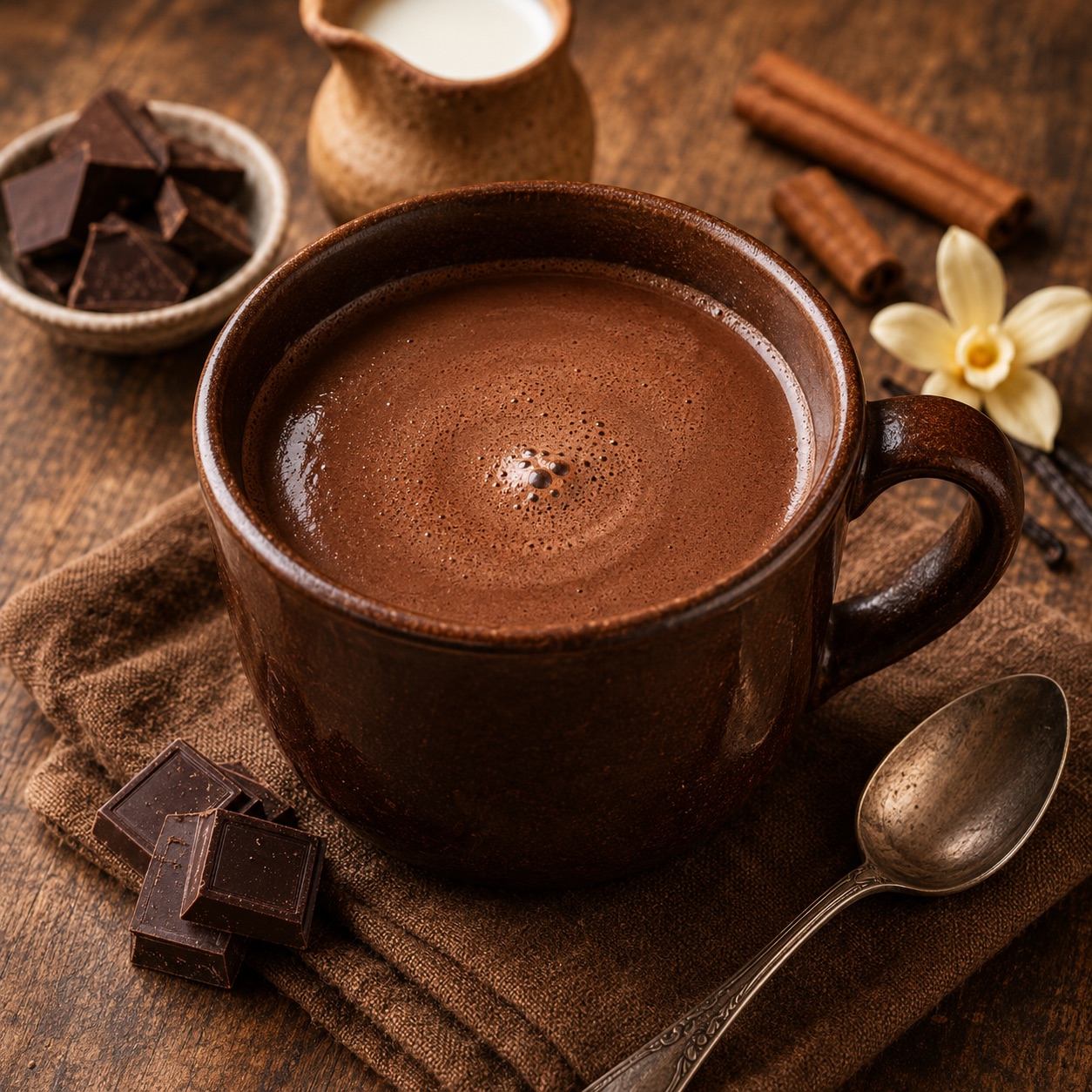
When I moved to the United States, the Neapolitan hot chocolate moved with me — but it changed. Not in its structure, not in the logic of low heat and slow whisking and dark chocolate, but in its ingredients. Sugar disappeared from my kitchen gradually, replaced by maple syrup and honey, which I found myself reaching for in ways I never had in Italy. Vanilla extract became a constant. The cinnamon, always present in my mother's version, became more present in mine. These are not improvements on the original. They are what happens when a recipe lives in a different pantry for long enough: it absorbs its surroundings.
The occasion stayed the same. We make this for the girls on their birthdays and their name days — Anna and her sister, in Massachusetts, with Italian chocolate ordered or brought back from trips. The specific gravity of the moment is unchanged from what it was in Caserta when I was a child: you wake up and there is something different on the table, something that signals the day is not ordinary. The hot chocolate is that signal. The version has adapted; the meaning has not.
This recipe uses no cornstarch. The classical Neapolitan version relies on it for its characteristic pudding density. This one gets its body from the reduced milk and the cocoa butter alone — the result is slightly less thick, slightly more fluid, with a different mouthfeel that I prefer for the maple syrup version. The sweetness profile of maple syrup and honey together is warmer and less direct than sugar; it needs a little more room to express itself, and a lighter consistency gives it that room.
What maple syrup and honey bring that sugar does not — and why cinnamon amplifies chocolate
Refined sugar contributes sweetness and nothing else — sucrose has no aromatic compounds, no phenolics, no complexity beyond its basic taste. Maple syrup contains over 60 identified phenolic compounds, including lignans and hydroxybenzoic acids, along with quebecol — a compound formed during the boiling of sap that is unique to maple products. These contribute the characteristic caramel-woody depth of maple flavor that sucrose cannot replicate. Honey adds fructose and glucose alongside aromatic volatile compounds that vary by floral source, as well as trace amounts of flavonoids. The combined sweetness of maple syrup and honey has a lower glycemic index than sucrose due to their fructose content, though in the quantities used here the metabolic difference is small. Cinnamon's primary volatile compound is cinnamaldehyde, which binds to the same receptors involved in chocolate flavor perception and enhances the detection of cocoa aromatics at the same concentration — the combination tastes more chocolatey than chocolate alone. This synergy has been documented in flavor science and is the biochemical basis for why cinnamon has been paired with chocolate since the Aztec tradition that the Spanish brought to Naples in the 16th century.
Recipe — serves 1
A tradition continued. Some things cross oceans intact.
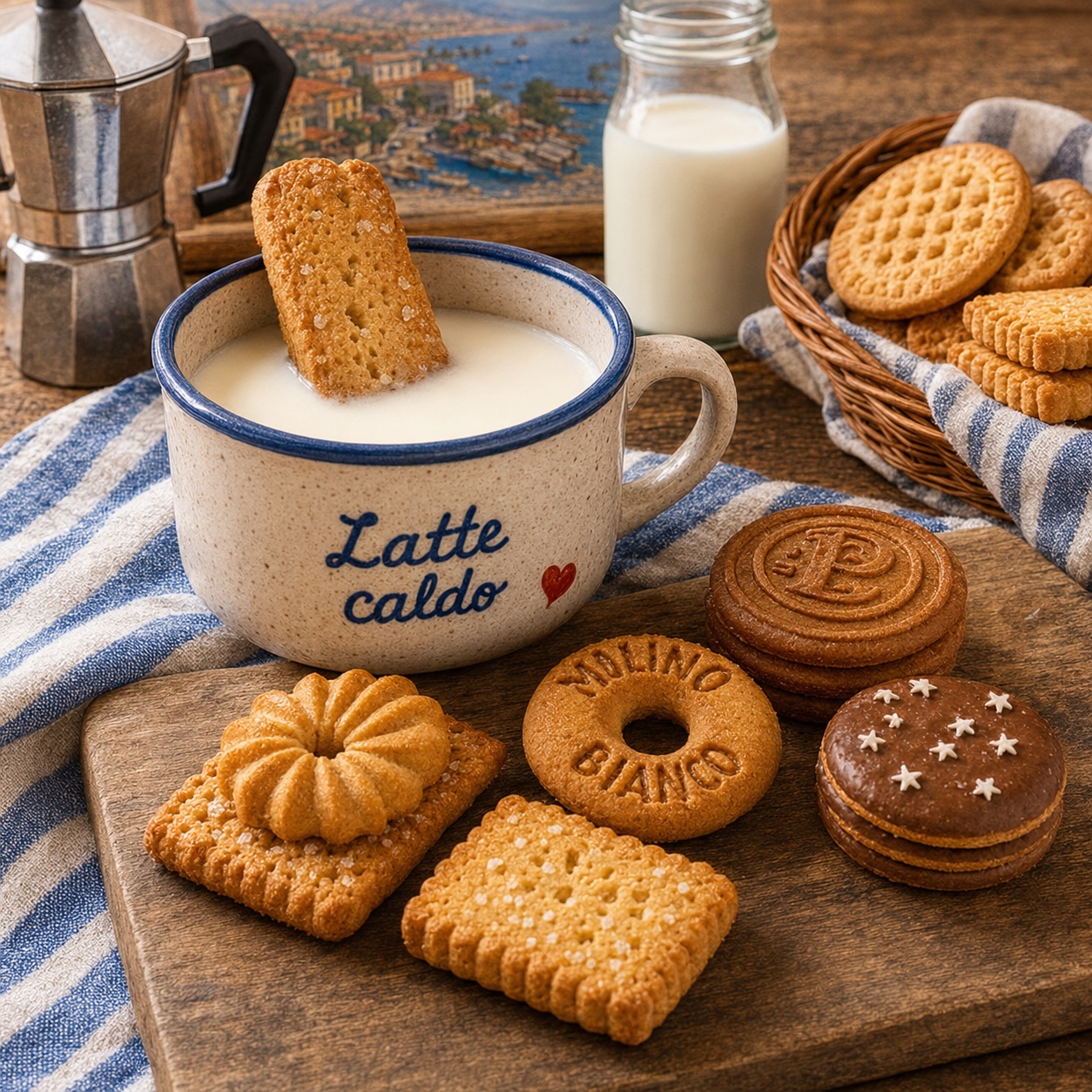
The biscotto dipped into thick hot chocolate is the zuppa di latte logic taken to its most indulgent form. The same capillary action, the same 3–5 second timing — but what the biscotto absorbs here is dark, slightly bitter, warmed with maple and cinnamon. A Macine comes out of this cup a different thing than it went in. This is the appropriate breakfast for a birthday morning or a name day, on either side of the ocean.
The classical version
Buon compleanno, buon onomastico —
e sempre la cioccolata calda al mattino dei giorni speciali.