Capretto al forno con patate: my father's Sunday, Christmas, Easter
Kid goat in the oven with potatoes — my father's dish for Christmas, New Year's Day, Easter, or just another Sunday that called for something special. We rarely ate roasted lamb, but capretto in the oven with potatoes was a recurring presence at the important meals. The goat gets all the attention, but the potatoes were the thing I remember most. Nobody else ever made them quite the same way.
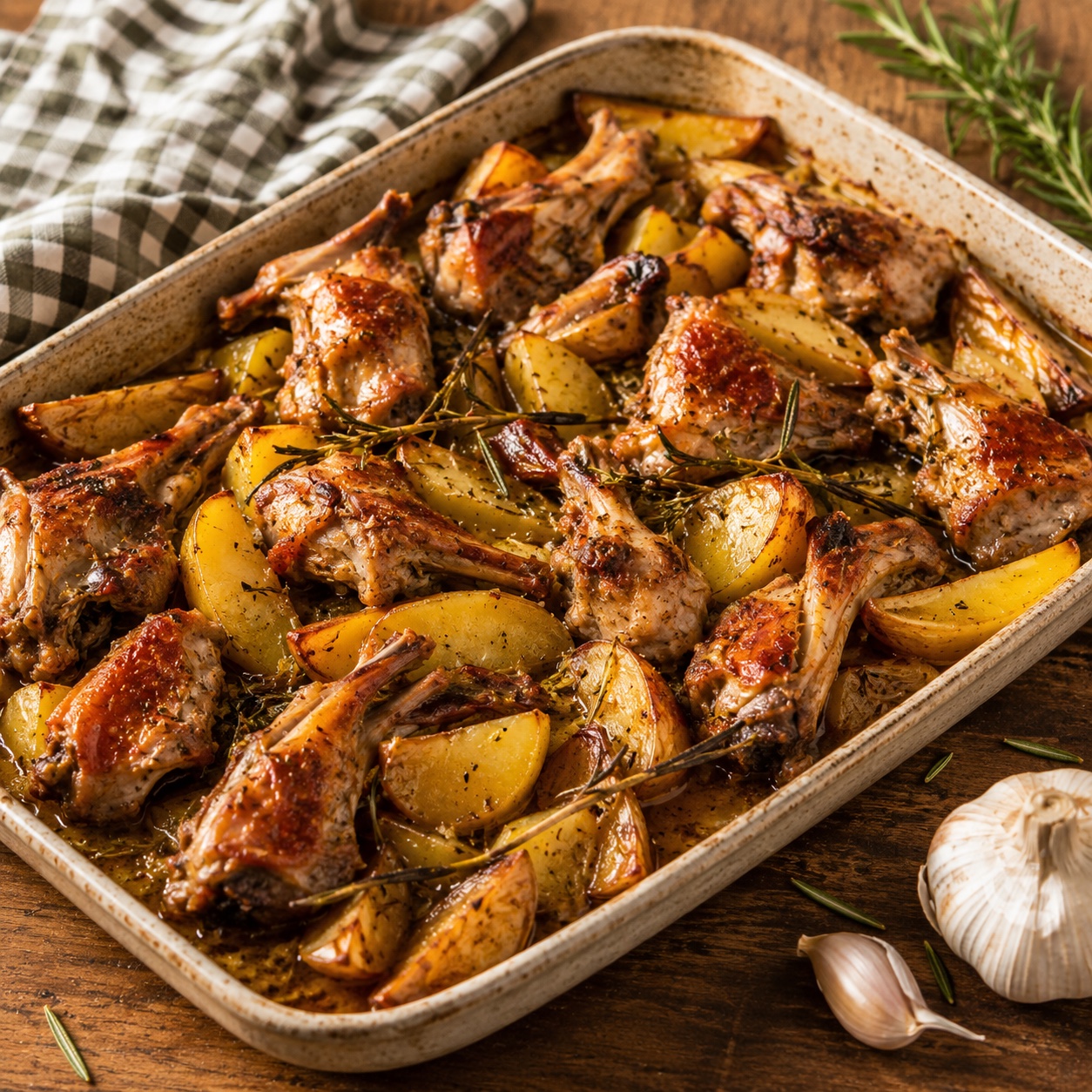
The capretto — kid goat, young and milk-fed, with a delicate, slightly sweet flavor that disappears quickly as the animal ages — is one of the great traditional meats of southern Italian cooking, and one of the most seasonal. It appears at Easter, when the young animals born in late winter have reached the right size, and at Christmas, and at other moments of celebration when the table needed to be worthy of the occasion. Not every Sunday — it was not a casual meat — but on the Sundays that mattered it was often there, in the oven with rosemary and garlic and white wine and olive oil, filling the kitchen with a smell that was entirely specific to those occasions and to those days.
My father liked it. This is worth noting because my father, as has been established in other posts in this collection, was a selective eater — he did not eat fish, and there were other things he approached with limited enthusiasm. The capretto was one of the dishes he genuinely enjoyed, and it appeared on the table at the occasions when he was at his most present and the meals were at their most extended — Christmas lunch, Easter Sunday, New Year's. The oven did the work and the kitchen smelled of it for hours and the meal that followed took the time that those meals were supposed to take.
The potatoes are the part of this dish that stays most clearly in memory. Not the goat itself — though the goat is good, tender and falling off the bone from the two-stage cooking, flavorful from the marinade and the wine — but the potatoes underneath it. They were cut thin and long, not in wedges or chunks — thin slices that lay flat in the pan and absorbed everything from the goat cooking above them. They cooked in the fat that rendered from the goat during the first covered stage and in the white wine that deglazed the pan in the second stage, and by the end there was a small amount of cooking liquid remaining — not a real sauce, barely a broth — with the onion and garlic and goat juices mixed into it, and the potatoes sat in this. They became soft enough to cut with the side of a fork, their thin surfaces slightly crusted where the oven heat had reached them directly, soaked through with fat and that small concentrated broth. They were slightly oily — the goat fat and the olive oil together — and that oiliness was not a problem to be corrected but the precise quality that made them what they were. I have made this dish several times since my family made it and the goat is always good. The potatoes, cut the right way, in the right pan, with the small amount of broth forming beneath them — I have been getting closer. Not there yet.
Kid goat: the leanest red meat, taurine, and the Maillard crust
Kid goat meat is nutritionally one of the leanest red meats available — significantly leaner than lamb, considerably leaner than beef, with a fat content of approximately 3–4% compared to 15–20% in lamb and 10–15% in beef. The fat that kid goat does contain is compositionally favorable: a higher proportion of unsaturated fatty acids relative to most other red meats, with a oleic acid content comparable to some cuts of pork. This lean composition is why marinating is important for the capretto — not to tenderize a tough collagen-rich cut, but to add surface fat and flavor that the meat's own lean profile does not fully provide. The white wine in the marinade and the cooking process contributes acidity (tartaric and malic acids) that partially denatures surface proteins and helps the meat retain moisture during the long oven cooking. The two-stage cooking method — covered at 180°C for 30 minutes, then uncovered at 200°C for 40–45 minutes — reflects a sound understanding of collagen and myofibrillar protein behavior: the covered low-temperature stage allows the collagen in the connective tissue to convert slowly to gelatin without the surface drying out, while the subsequent high-temperature uncovered stage drives the Maillard browning reactions that produce the golden crust. The potatoes' specific quality in this preparation comes from two mechanisms: first, osmotic absorption of the rendered goat fat and wine liquid during the covered stage, when the potato cells are still intact and absorbing the surrounding cooking medium; second, the partial dehydration of the potato surface during the uncovered high-heat stage, which concentrates the absorbed fat and creates the characteristic thin crust. The thin long-slice cut — rather than wedges or chunks — is structurally significant: it maximizes the ratio of surface area to volume, meaning more of the potato is in direct contact with the cooking liquid and with the radiant oven heat simultaneously. Thin slices absorb the goat fat and pan juices more completely and develop a crust more quickly than thick cuts would. The small amount of concentrated liquid that forms at the bottom of the pan by the end of cooking — barely a broth, the goat juices, wine, onion, and garlic reduced to a small pool — is absorbed by the bottom surfaces of the potato slices and contributes to the final flavor in a way that is invisible in the finished dish but would be noticed in its absence. The result — soft interior, thin crusted exterior, fat-enriched throughout — is not a compromise between two textures but the simultaneous presence of both, achievable only by cooking the potatoes thin, in proximity to the meat, for the full duration.
The recipe
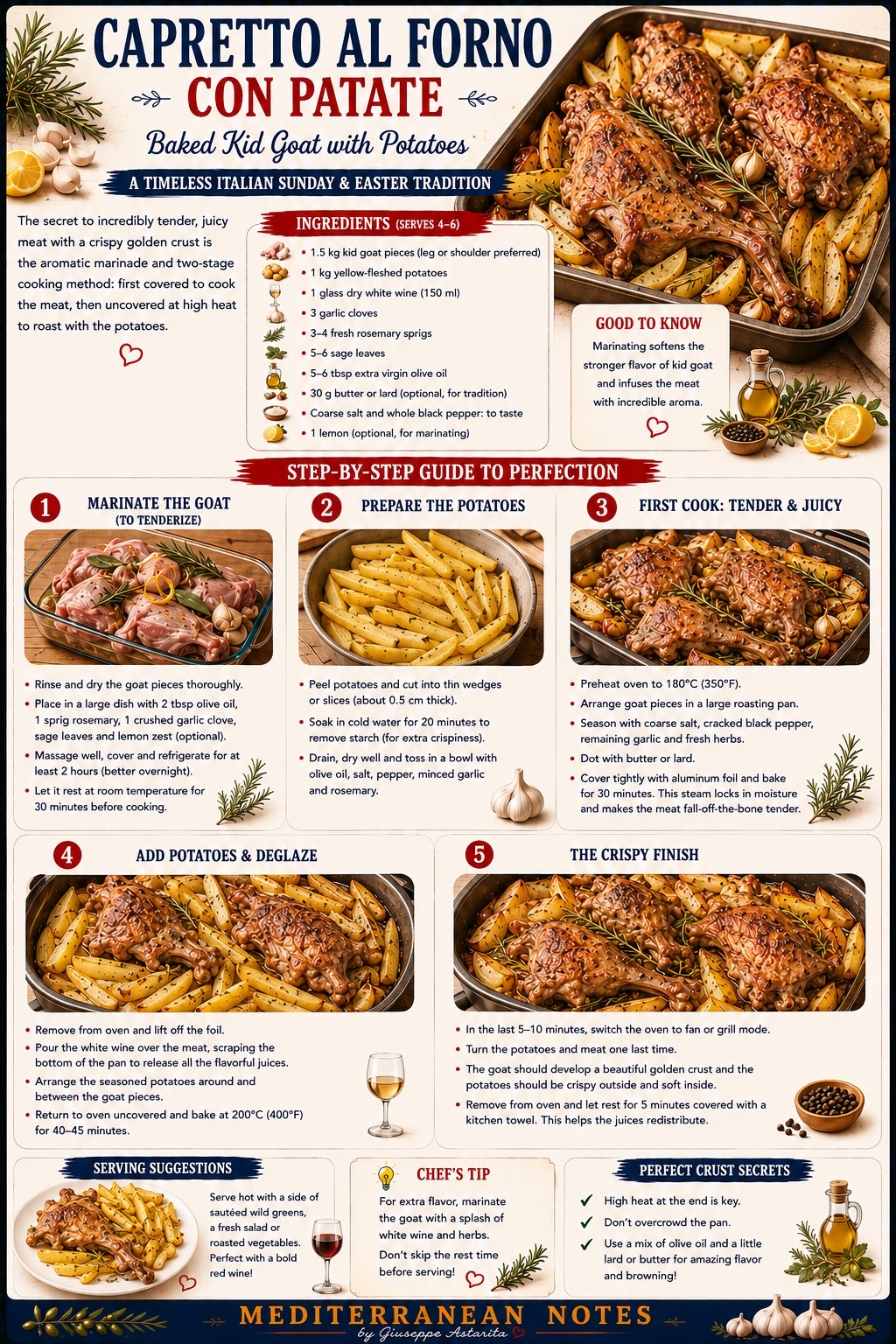
Two-stage cooking: covered first to steam the meat tender, then uncovered at high heat for the crispy finish. The potatoes cook in the same pan throughout. Serves 4–6.
Ingredients
Method
Marinate the goat — at least 2 hours, overnight is better. Rinse and dry the goat pieces thoroughly. Place in a dish with 2 tablespoons olive oil, one rosemary sprig, one crushed garlic clove, the sage leaves, and lemon zest if using. Massage well, cover, and refrigerate. Remove from the refrigerator 30 minutes before cooking — cold meat from the refrigerator directly into a hot oven produces uneven cooking.
Marinating softens the stronger flavor of kid goat and infuses the meat with aromatic depth. For lamb, marinating is less critical but still improves the result.
Prepare the potatoes — thin and long. Peel and cut into thin long slices, about 0.5 cm thick — not wedges, not chunks. The thin cut is important: it maximizes surface area so the potatoes absorb the goat fat and cooking juices from below while developing a thin crust on the exposed surface from the oven heat above. Soak in cold water for 20 minutes to remove surface starch. Drain, dry thoroughly, and toss in a bowl with 2 tablespoons olive oil, salt, black pepper, the remaining minced garlic, and a sprig of rosemary.
The thin long cut is what produces the specific texture — soft and almost melting inside with a light crust on top, saturated with the cooking juices. Thicker cuts or wedges produce a different result entirely.
First cook — covered, tender and juicy. Preheat oven to 180°C (350°F). Arrange the goat pieces in a large roasting pan. Season with coarse salt, cracked black pepper, and the remaining herbs. Dot with butter or lard if using. Cover tightly with aluminum foil and bake for 30 minutes. The steam trapped inside locks in moisture and begins converting the collagen to gelatin — this stage is what makes the meat fall-off-the-bone tender.
Add potatoes and deglaze. Remove from oven and lift off the foil. Pour the white wine over the meat, scraping the bottom of the pan to release the flavorful juices. Arrange the seasoned potatoes around and between the goat pieces. Return to oven uncovered and raise the temperature to 200°C (400°F). Bake for 40–45 minutes, turning the potatoes once or twice.
The potatoes need space — do not pile them on top of each other. They should have contact with the pan bottom to develop their crust from below, and direct oven heat from above.
The crispy finish. In the last 5–10 minutes, switch the oven to fan or grill mode. Turn the potatoes and meat one final time. The goat should develop a beautiful golden crust and the potatoes should be crispy outside and soft inside. Remove from oven and rest for 5 minutes covered loosely with a kitchen towel before serving. The resting redistributes the juices.
Do not skip the rest. A roast cut immediately loses more juice than one that has rested. Five minutes is enough and the difference is noticeable.
This is a dish that rewards a good oven and patience. The smell of it cooking — rosemary and garlic and white wine and the specific richness of the goat fat rendering — is the smell of the occasions it belonged to. Christmas lunch. Easter Sunday. The important Sundays. My father at the head of the table. The potatoes in the pan underneath everything, absorbing what cooked above them. Some things cannot be fully replicated, but the attempt is worth making every time.
A generation earlier, in my mother's family, capretto meant more of the animal than this. Testa di capretto con patate — the head, cooked with potatoes the same way — was part of the same tradition, from a time when nothing on the animal went unused. It's not a dish I'd ask anyone to reconstruct from a blog post, but it belongs in the honest record of what capretto meant before it meant only the cuts we buy today.
Buon appetito — e buona domenica.