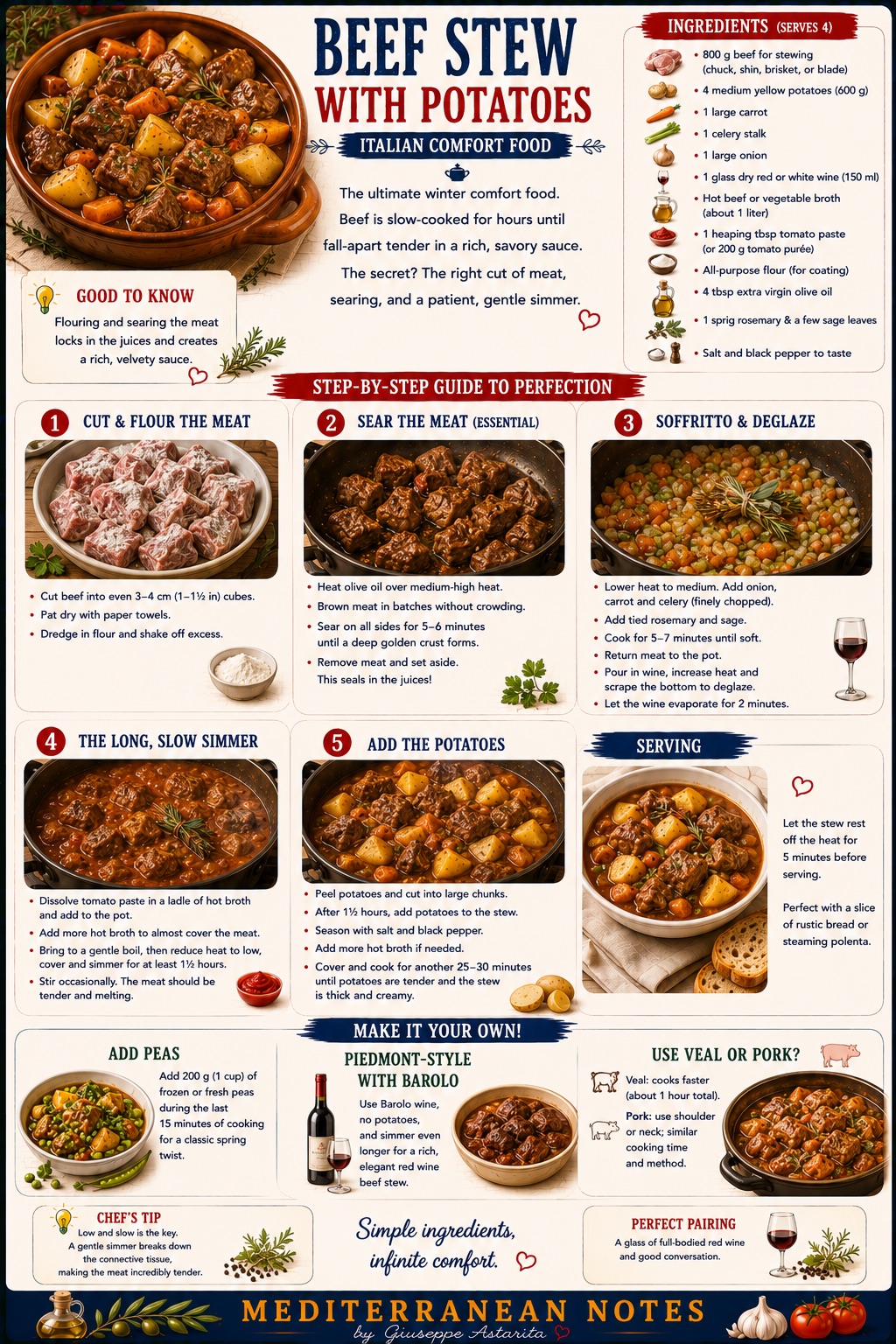
Beef Stew with Potatoes
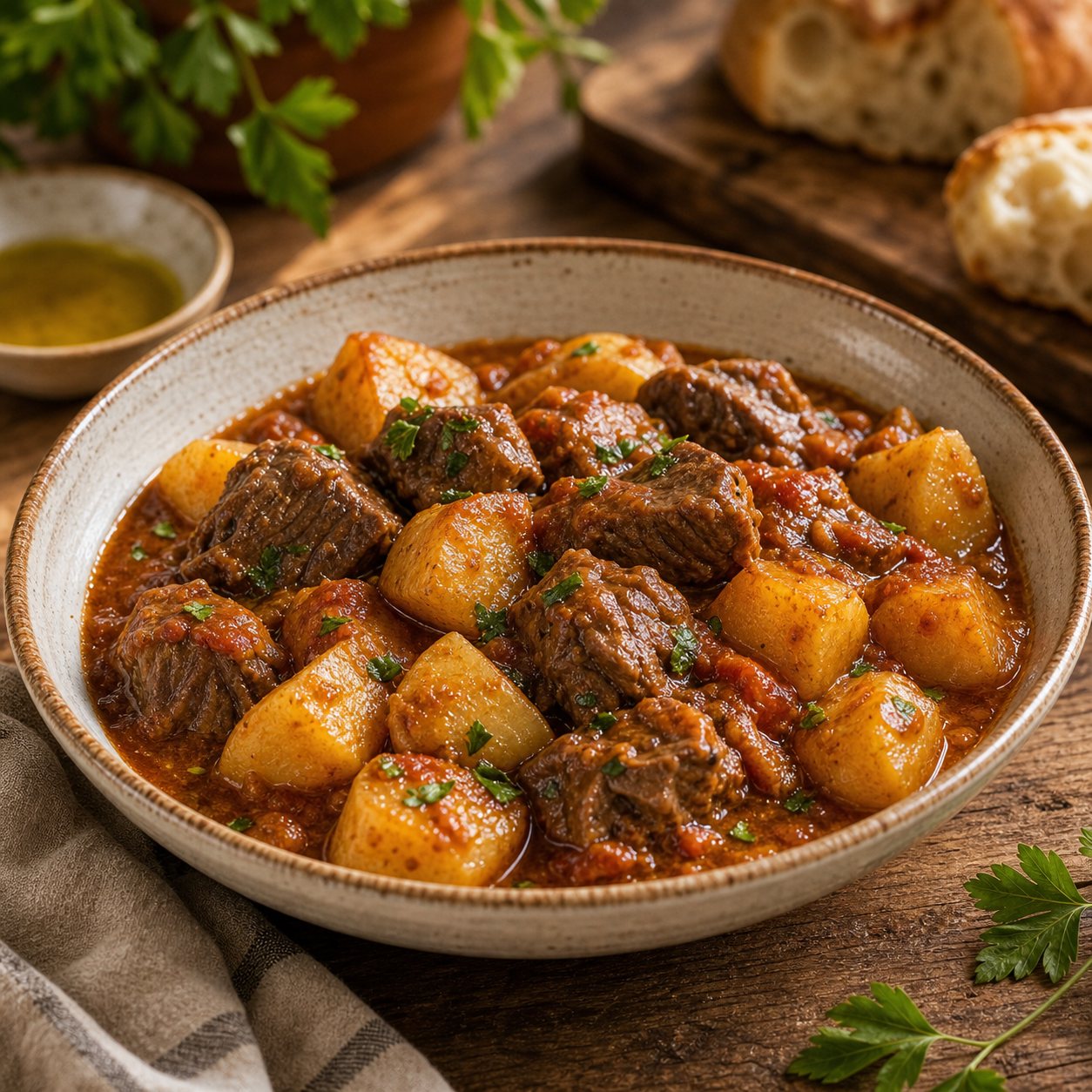
A slow beef and potato stew with tomato, wine, onion, carrot, celery, and herbs.
Ingredients · serves 4
Method
1. Cut & flour the meat. Cut the beef into even 3–4 cm cubes and pat dry. Dredge in flour and shake off the excess.
2. Sear the meat (essential). Brown the beef in batches over medium-high heat without crowding, 5–6 minutes until a deep crust forms. Remove and set aside — this seals in the juices.
3. Soffritto & deglaze. Lower the heat, add finely chopped onion, carrot, celery and the herbs, and cook 5–7 minutes until soft. Return the meat, pour in the wine, raise the heat and scrape the base; let it evaporate 2 minutes.
4. The long, slow simmer. Dissolve the tomato paste in a ladle of hot broth and add it, then more broth to almost cover. Bring to a gentle boil, lower to a bare simmer, cover and cook at least 1½ hours, until the meat is melting.
5. Add the potatoes. Peel and cut into large chunks, add to the stew, season, and cook a further 25–30 minutes until tender and the sauce is thick.
6. Serve. Rest off the heat 5 minutes. Perfect with rustic bread or polenta.
This was my grandmother's winter dish, not my mother's. When we visited her on Sunday afternoons in the cold months, this was usually what was in the pot — a piece of beef shoulder or shin that had been going since morning, the apartment smelling of onion and wine from the stairwell. She added the potatoes late, maybe forty minutes before lunch, and they would arrive at the table almost falling apart, tasting entirely of the sauce they had spent the last hour inside.
Sunday, in the Campanian sense, meant time. Weekday meals were assembled quickly — pasta, something simple, whatever was already prepared. Sunday was the day you started a pot in the morning and let it go. The stew was not complicated, but it required presence: checking the liquid, adjusting the flame, making sure the onion and carrot and celery had dissolved properly before the wine went in. My grandmother did this without consulting anything. The timing was in her.
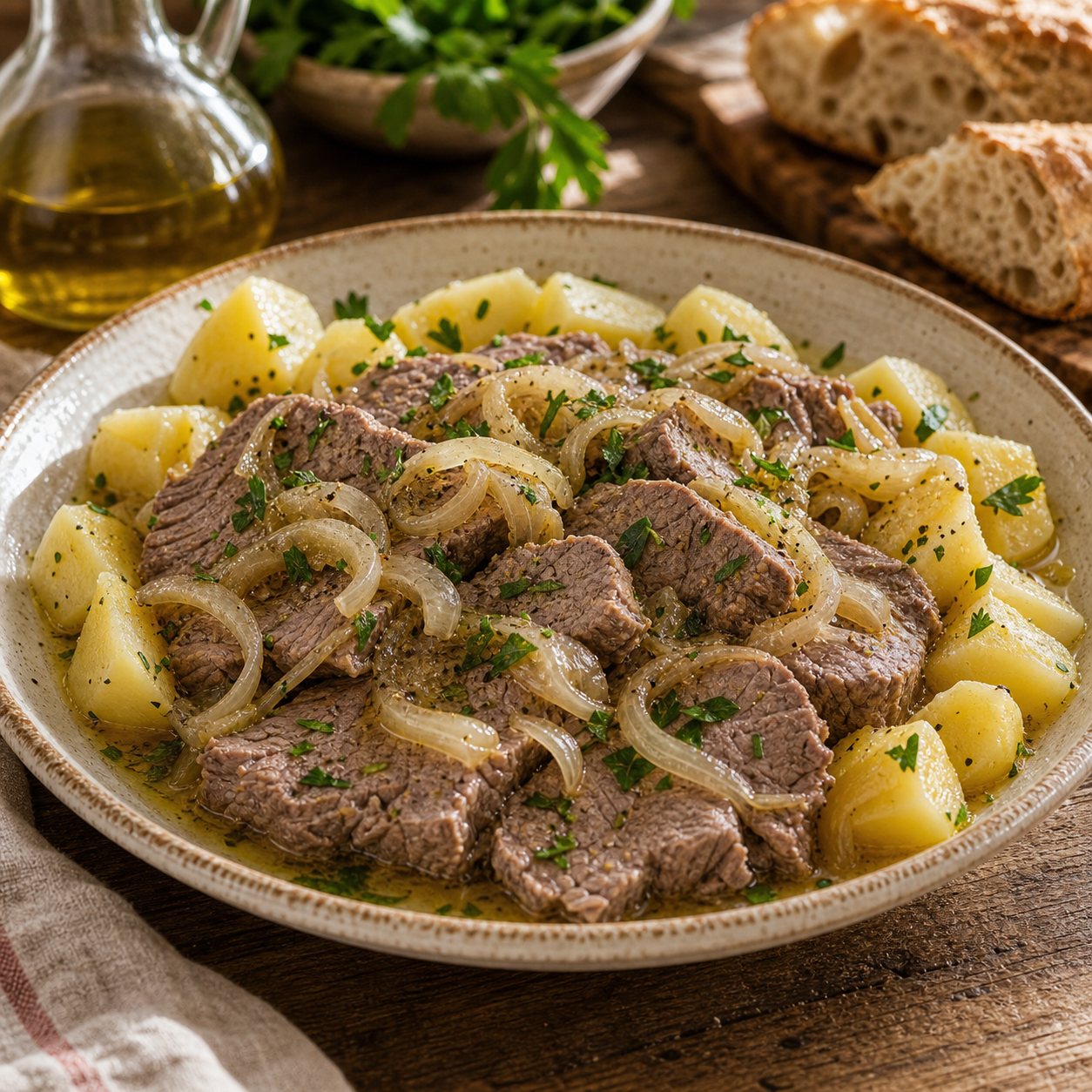
The potatoes are the best part. They go in when the beef is already nearly done, cut into large pieces so they hold their shape, and spend forty minutes absorbing a liquid that already has two hours of beef and tomato and wine in it. By the time you serve them, they taste more of the stew than the beef does. This is not an accident.
Beef shoulder and shin contain a high proportion of collagen — the structural protein in connective tissue that holds muscle fibers together. At cooking temperatures below about 70°C, collagen contracts, squeezing moisture out of the muscle and producing the dry, tough texture of overcooked meat. But when you hold the meat at a gentle simmer (around 80–85°C) for two hours or more, collagen undergoes hydrolysis: the long protein chains break down into shorter fragments and eventually into gelatin, a soft, water-soluble protein that coats the meat fibers and produces the yielding, silky texture of a properly braised stew. This is why the cheap cuts are superior here — lean cuts like tenderloin have almost no collagen and simply dry out during long cooking. The fat marbled through the shoulder also melts slowly and bastes the fibers from inside. The potatoes absorb the gelatin-rich braising liquid, which is why they taste so much better than potatoes boiled in water: they are, by the end, soaking in liquid collagen.