Caponata Napoletana
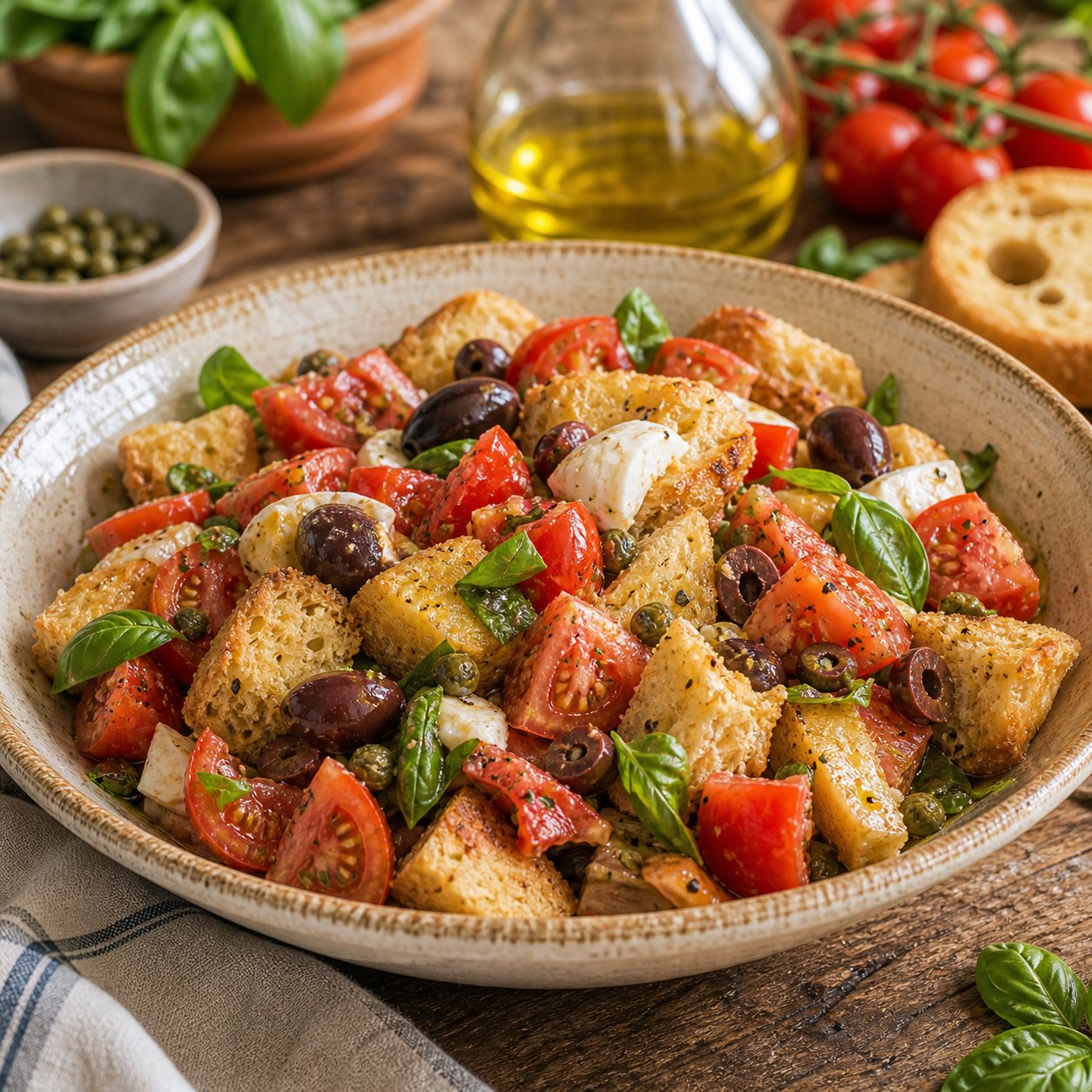
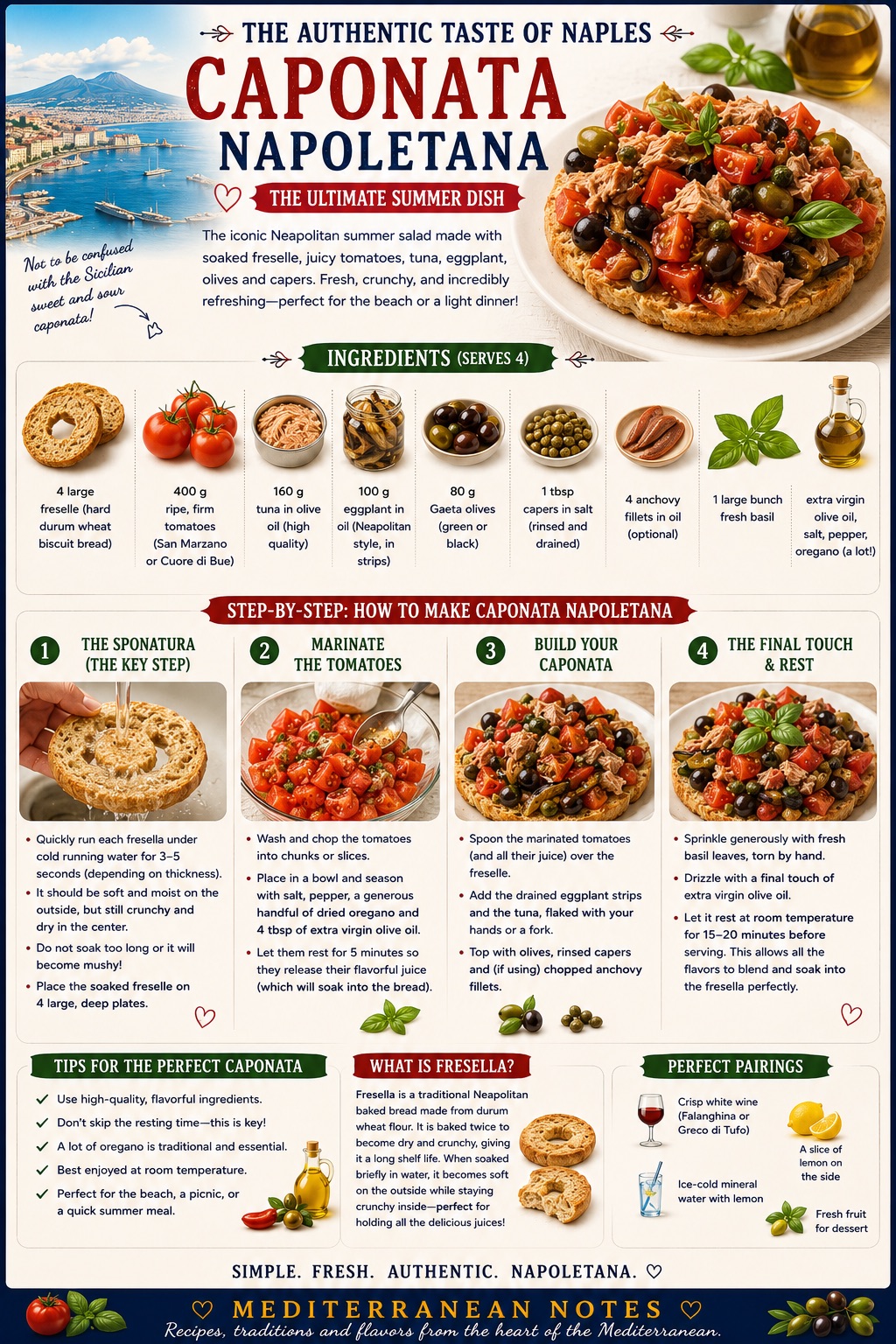
A Neapolitan cold vegetable and bread salad with freselle, tomatoes, olives, capers, anchovies, basil, and olive oil.
Ingredients · serves 4
Method
1. The sponatura (the key step). Run each fresella briefly under cold water — 2–5 seconds depending on thickness. It should soften on the outside but stay crunchy and dry in the centre; do not soak, or it turns mushy. Set one on each plate.
2. Marinate the tomatoes. Chop the tomatoes, season with salt, pepper, a generous amount of dried oregano and a few tablespoons of olive oil, and rest 5 minutes so they release their juice — which will soak into the bread.
3. Build the caponata. Spoon the tomatoes and all their juice over the freselle. Add the eggplant strips, then the olives, rinsed capers and the anchovies if using. (A can of good tuna makes it heartier.)
4. The final touch & rest. Scatter generously with hand-torn basil and a last drizzle of olive oil. Rest at room temperature 15–20 minutes so everything blends and soaks in.
We ate this at the beach. Every August for two weeks the family rented a house near Licola, forty minutes from Caserta, and my mother's cooking shifted entirely to things that required no heat and nothing elaborate. The caponata was made the night before, kept in the refrigerator, and eaten at noon on plastic chairs under the pergola, still cold. It was exactly the right food for the hour and the temperature — salty, bright, filling, done in ten minutes the evening before.
The Neapolitan caponata is not the Sicilian agrodolce eggplant dish that shares its name. This is something older: a sailor's meal built on freselle — twice-baked ring-shaped bread, dried hard enough to last weeks at sea — softened in water and dressed with whatever was at hand. Tomatoes, olives, capers, anchovies, basil. No cooking. The name likely comes from caupona, the Latin word for a roadside tavern, the kind of place where travelers ate on rough tables from preserved things. The dish is essentially that meal, unchanged across centuries, moved from the wharf to the beach house.
The fresella must be handled correctly. Too little water and it stays chalky at the center; too much and it collapses. The right amount is three seconds submerged in cold water, then light thumb pressure to feel when the crust gives slightly while the interior is still firm. My mother did it by feel and without thinking. It took me several batches to get it right.
Fresella is twice-baked — baked once, sliced, baked again — which drives out nearly all moisture and causes extensive starch retrogradation: the starch molecules that were gelatinized in the first bake re-align into a rigid crystalline structure. This is what makes stale and dried bread hard. When you dip the fresella in water, you are reversing this process partially. Water penetrates the starch granules and disrupts the crystalline network, a process called rehydration. The Maillard-browned crust slows water entry, which is why the three-second dip is enough to soften the interior without destroying the structure. A full soak would flood the granules, swell them past their network, and produce mush. The brief dip exploits the gradient: the outer millimeter softens first and acts as a barrier, giving you a window — about thirty seconds — to dress and serve before the water continues migrating inward.