Braciole Napoletane nel Ragu
Stuffed beef rolls slow-cooked in ragu -- the Sunday centrepiece, better the next day
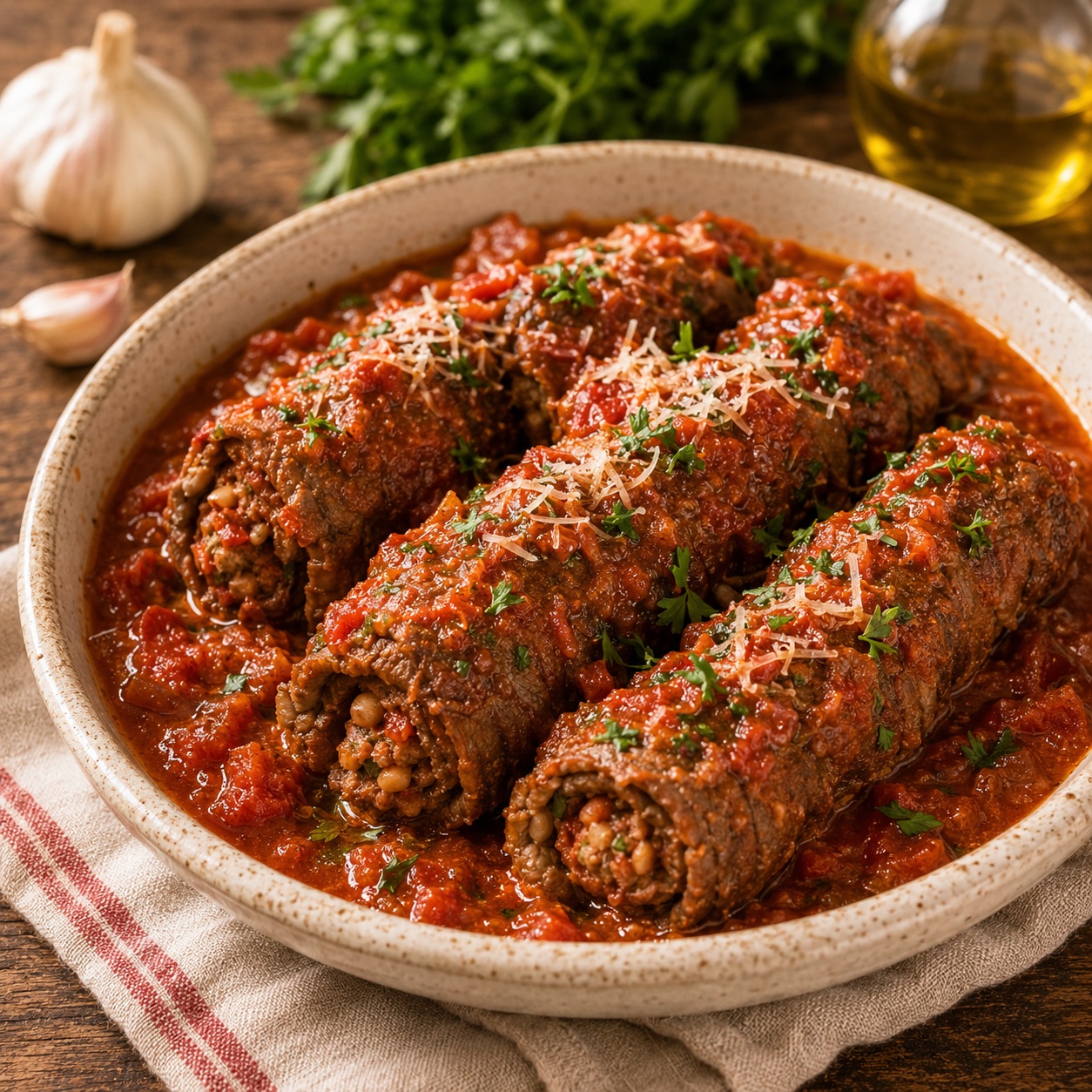
The braciole napoletane are one of the great Sunday dishes -- thin slices of beef filled with Parmigiano, Pecorino, prosciutto, eggs, garlic, and parsley, rolled tightly and secured with kitchen string, browned hard in a pot, and then simmered for two to three hours in a rich tomato sauce until the meat is meltingly tender and the sauce has absorbed everything the braciole has released into it. The sauce from the braciole -- the ragu that forms around them during those hours of slow cooking -- is the ragu that goes on Sunday pasta, enriched by the rendering fat and the collagen of the beef rolls. Nothing is wasted. The braciole themselves are the second course, sliced thickly and served with the remaining sauce. The pasta with the braciole ragu is the first course. One long preparation produces two courses and defines the meal.
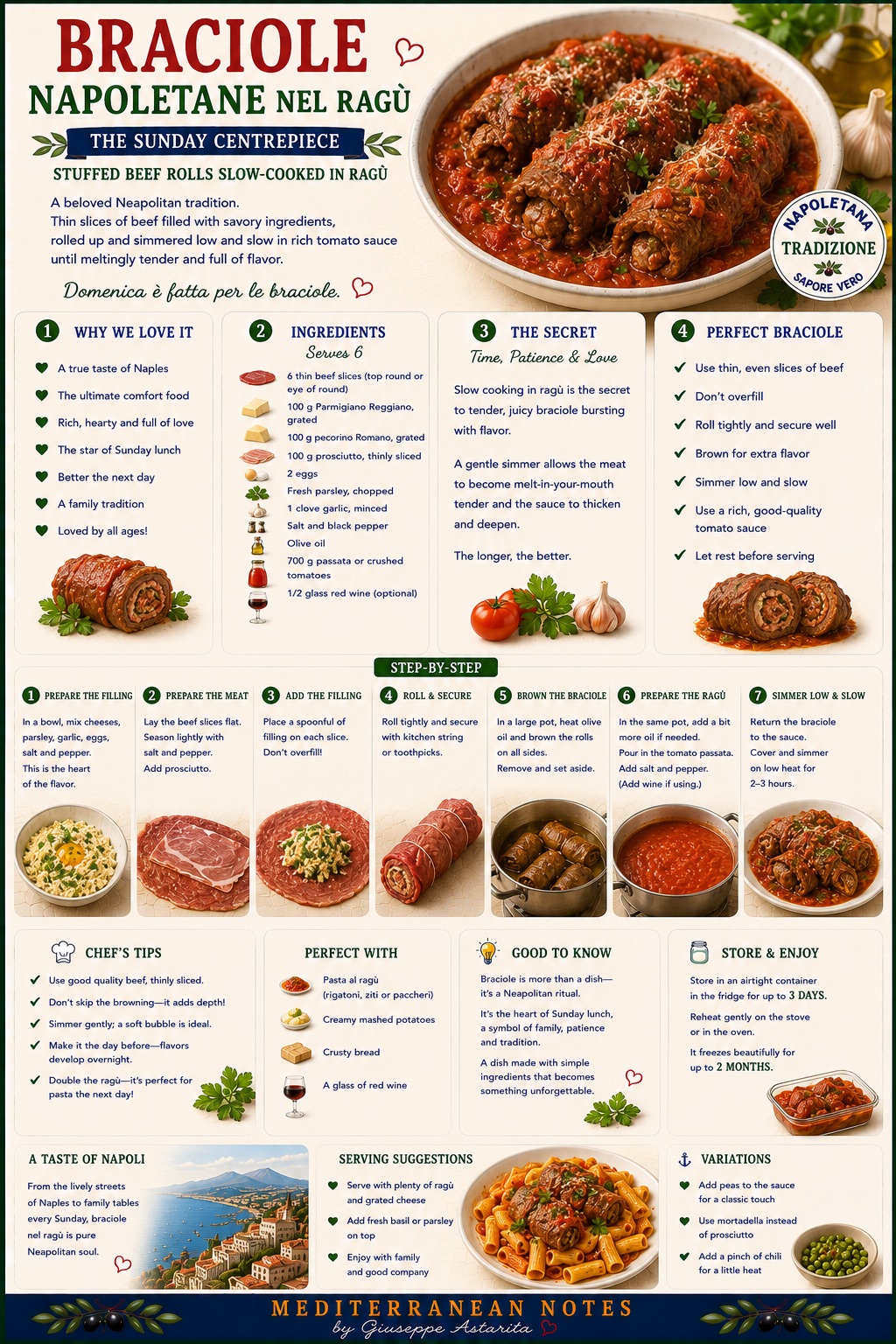
The infographic notes: Domenica e' fatta per le braciole -- Sunday is made for the braciole. This is not a weekday dish. The two to three hour simmer, the rolling and tying, the long preparation of the filling -- all of this requires the kind of unhurried time that Sunday morning provides. My mother's generation understood this; the braciole went into the pot in the morning and the household organized itself around the slow, fragrant progress of the sauce. The smell of braciole cooking is the smell of Sunday in Naples, and it is one of the most specific and most powerful food memories in the Campanian sensory vocabulary.
The beef cuts used for braciole -- top round or eye of round -- are lean cuts with significant collagen in their connective tissue. Collagen is a tough protein that makes raw or briefly cooked lean beef chewy and difficult; at sustained temperatures above 70C over 2-3 hours, collagen converts to gelatin, which is soft, soluble in water, and has a lubricating quality that makes the surrounding meat fibers seem tender even though the individual muscle proteins have contracted with heat. The gelatin also dissolves into the tomato sauce, contributing the body and glossiness that distinguish a long-cooked ragu from a short one. The braciole filling -- eggs, cheese, fat from the prosciutto -- contributes additional emulsifying compounds to the interior that baste the meat from within during the long simmer. This is why a properly cooked braciole, sliced open, reveals a moist, flavorful interior that the exterior sauce alone could not have produced.
The recipe
Serves 6. The ragu produced will be enough for pasta as a first course. Start in the morning for Sunday lunch, or the day before for best results.
Buon appetito -- e buona domenica.