CoursesBasicsFirst CoursesSecond CoursesSides & VegetablesSoupsSaucesEggs & FrittatePizza & BreadBreakfastSnacksStreet FoodDesserts
DietVegetarianVegan
SeasonSpringSummerAutumnWinter
MainSeafoodMeatEggs
MoreCulture & TraditionsGlossaryAbout

Pesto di Noci
The walnut pesto, on its own

Walnuts, a few pine nuts, garlic, Parmigiano, and olive oil, worked into a pale, creamy paste. Northern by origin — Liguria makes its salsa di noci for pansotti — but my mother made her version now and then, and it was my sister's favorite.
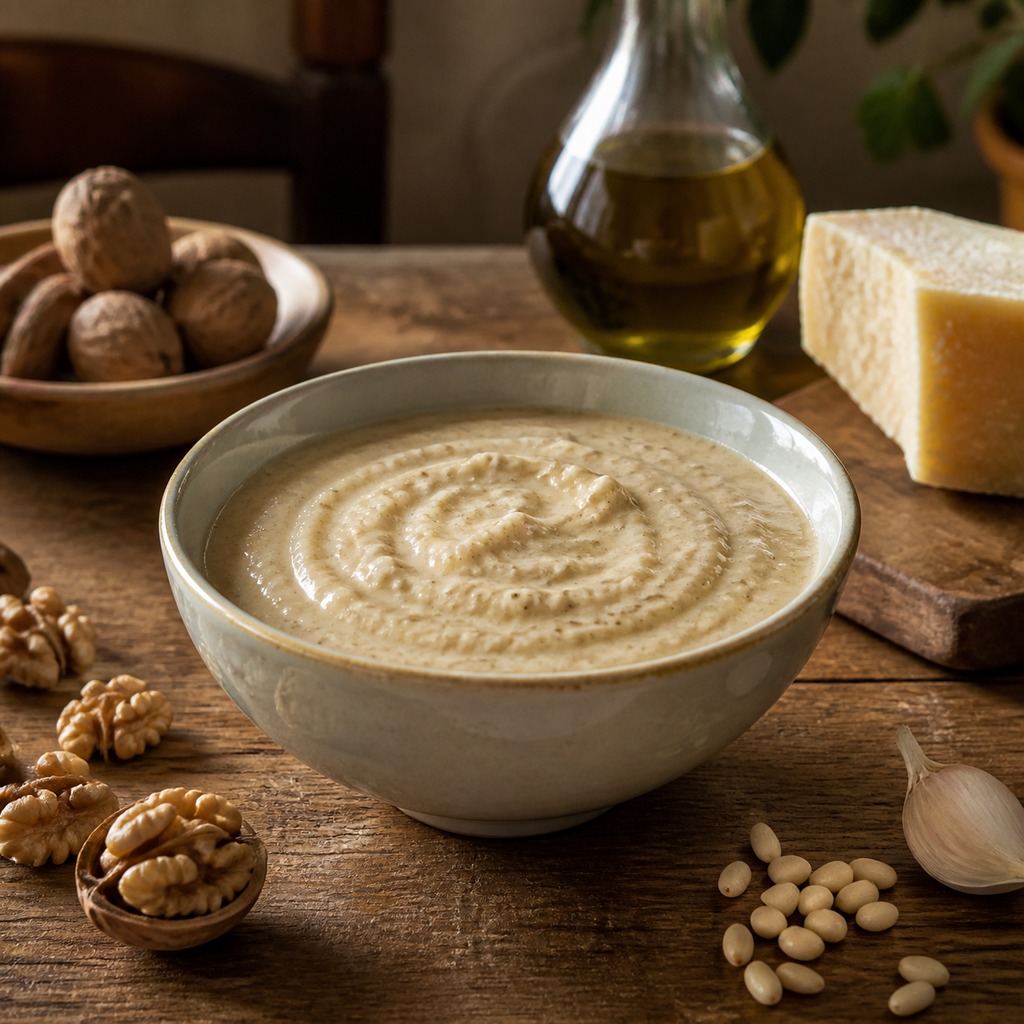
Pesto di noci

This page is for the sauce alone — the dish it usually ends up on has its own page. Like basil pesto, walnut pesto is not really pasta-bound: spread it on warm crostini, spoon it over potato gnocchi, loosen it over roasted or steamed vegetables, or tuck it next to a cheese plate where it does the work of a condiment.

It is richer and rounder than basil pesto, with no herbs to fade — which makes it a better keeper. A jar under a film of oil holds most of a week in the fridge, tasting the same on day five as on day one.

Blanch the walnuts a minute and rub off the thin skins — the skins hold the tannins, and the pesto turns sweeter and paler without them.
Why the skins matter

A walnut's bitterness lives almost entirely in the papery skin around the kernel, which is dense with tannins — the same astringent polyphenols found in tea and young red wine. The kernel itself is mild, sweet, and mostly fat. A one-minute blanch softens the skin enough to rub off in a towel, taking most of the tannin with it; what remains blends into a paste that is noticeably sweeter, creamier, and paler than one made from unpeeled nuts.

Walnut fat is also unusually rich in polyunsaturated oils, which go rancid faster than olive oil — so taste your walnuts before committing a batch, and store the finished pesto cold, under oil, away from light.


The recipe

Makes about a cup — enough to dress pasta for four, or to keep as the week's condiment jar.
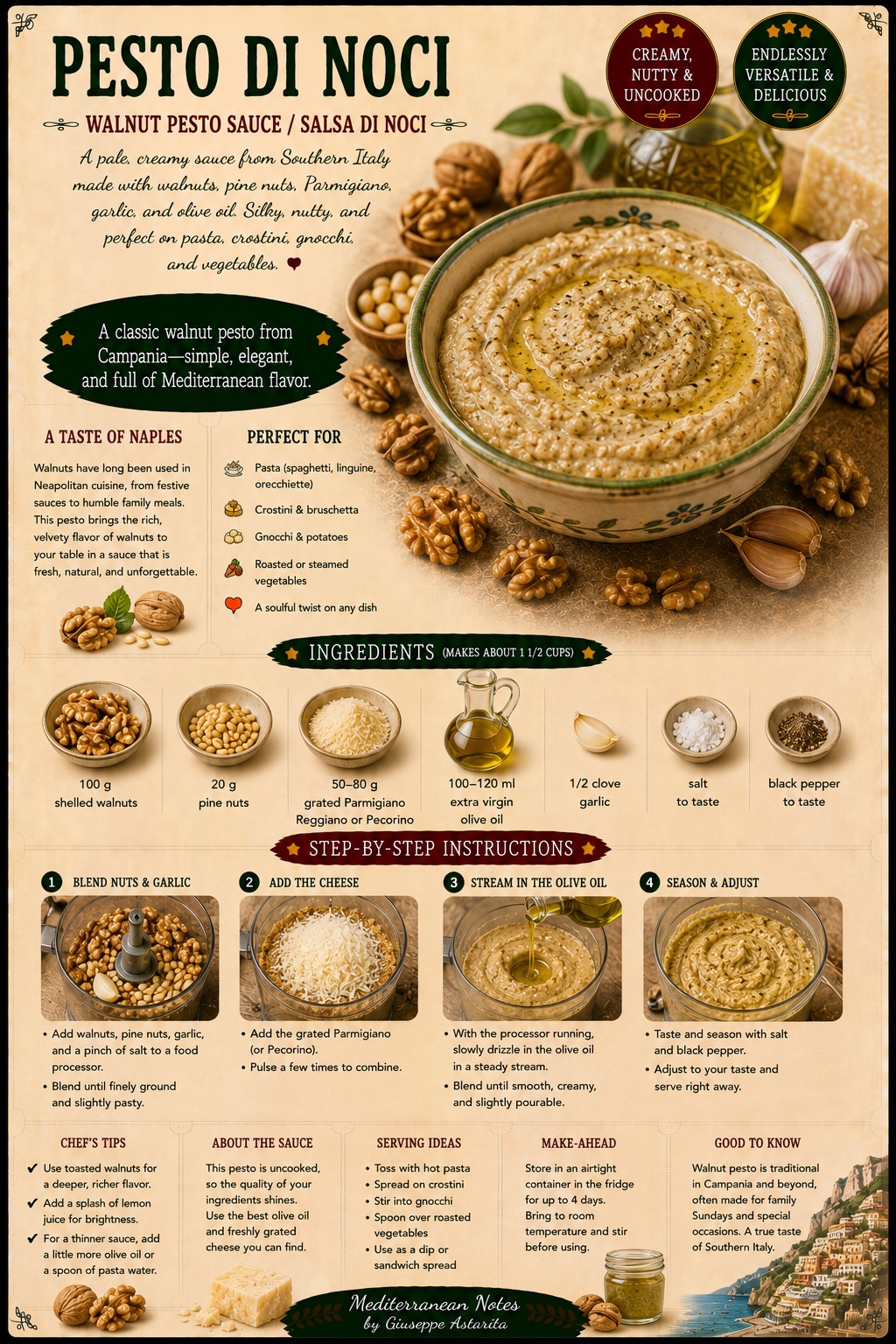
Pesto di noci — infographic by Giuseppe Astarita
Pesto di Noci — walnuts, pine nuts, Parmigiano, garlic, and olive oil. Click to enlarge.
100 g, shelledWalnuts
20 gPine nuts
50-80 g, gratedParmigiano Reggiano or Pecorino
100-120 mlExtra virgin olive oil
1/2 cloveGarlic
To tasteSalt and black pepper
1
Blanch the walnuts in boiling water for a minute, then rub them in a clean towel to shed the thin skins. Optional, but it makes a sweeter, paler pesto.
2
In a food processor or mortar, work the walnuts, pine nuts, garlic, grated cheese, and a pinch of salt to a coarse paste.
3
With the blades running (or while pounding), stream in the olive oil until the paste is smooth, creamy, and holds together.
4
Season with black pepper and adjust the salt — the cheese carries plenty already.
For a softer, more delicate version, stir in a spoonful or two of fresh ricotta at the end — the way it often turns Neapolitan on our table. Keeps most of a week in the fridge under a film of oil.

Related

Pasta al pesto di noci
The dish this sauce was usually headed for — with the ricotta, lemon, and sun-dried tomato variations. See the full recipe.
Pesto di basilico
The green summer cousin — brighter, herbal, best eaten fresh. See the full recipe.

Buon appetito.

More from Sauces
Pesto di basilico
Pesto di Basilico
The basic basil pesto, mortar or blender.
Pesto di olive
Pesto di Olive
The Gaeta olive paste for bruschetta and crostini.