Peperoni Sott'Aceto
Sweet peppers in vinegar -- the Neapolitan preserve that gets better with time
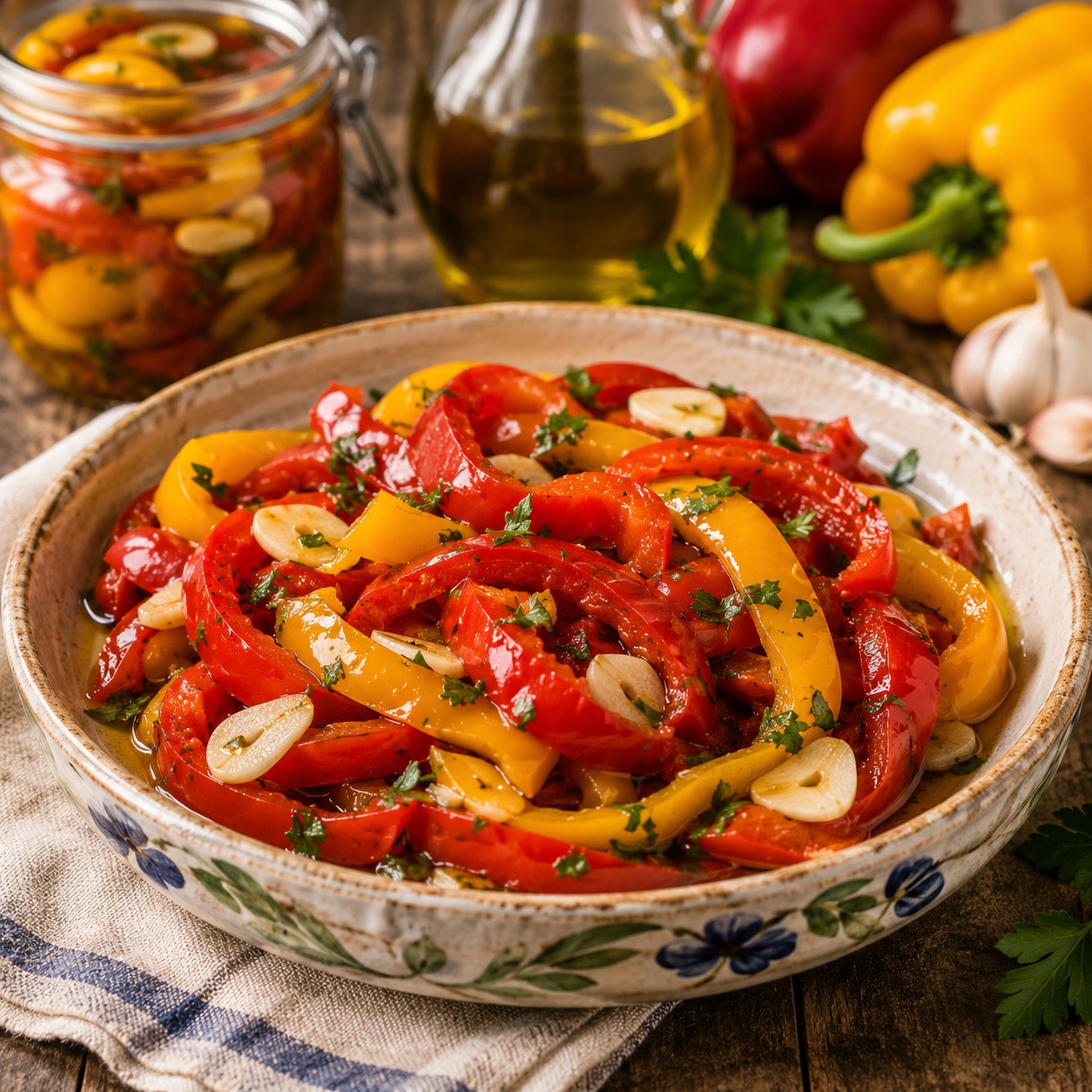
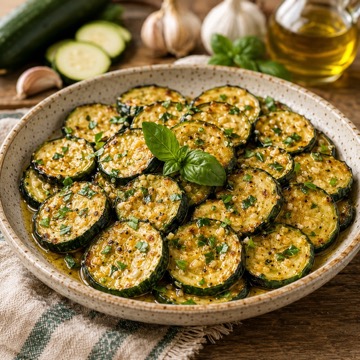
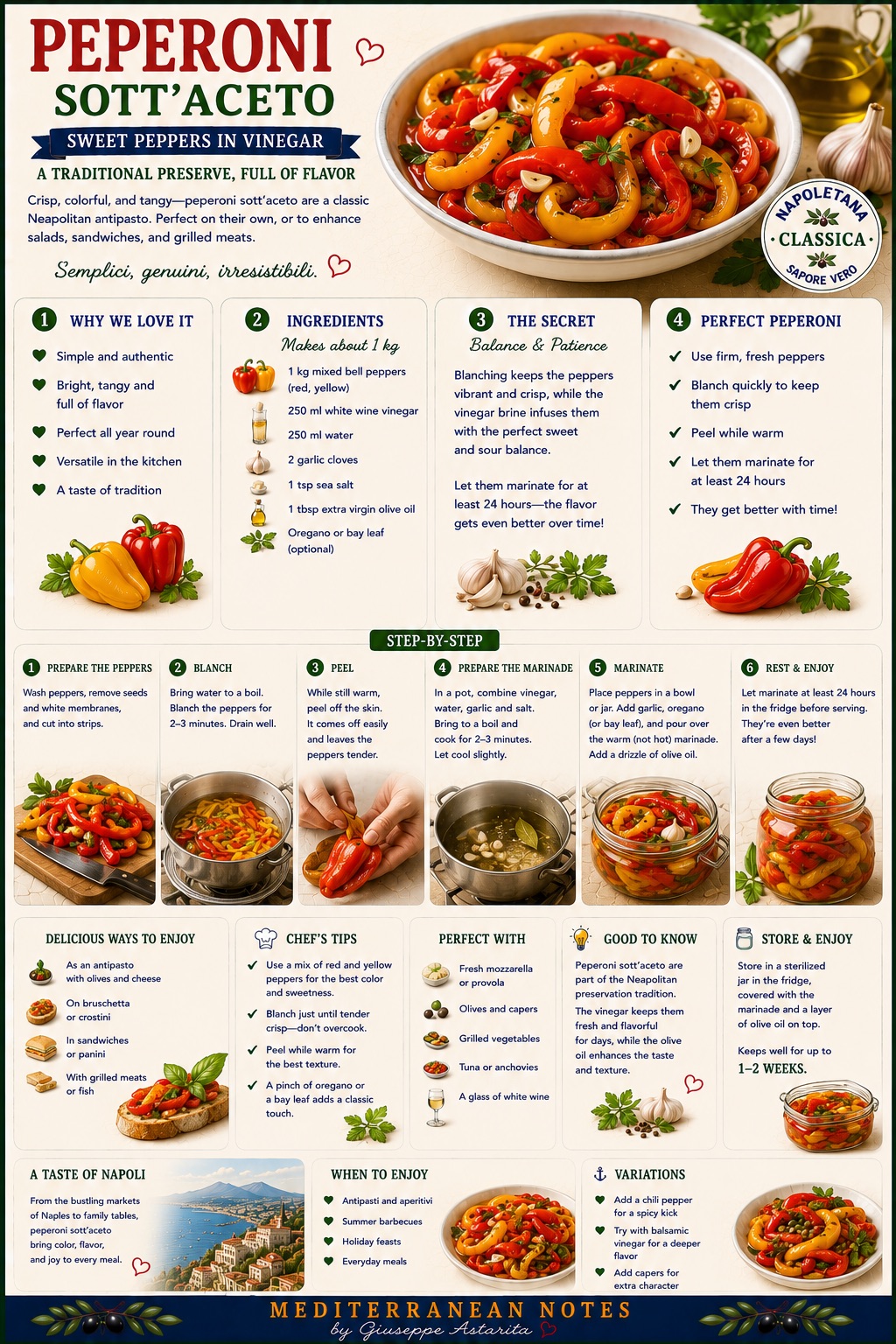
The peperoni sott'aceto belong to the long Neapolitan tradition of preserving summer vegetables in vinegar -- the same escabèche logic that produces the zucchine alla scapece and the papaccelle that appear throughout Campanian cooking. Sweet red and yellow bell peppers, blanched briefly to keep them crisp and to loosen their skins, then peeled while still warm and submerged in a brine of white wine vinegar, water, garlic, salt, and olive oil. The result keeps for one to two weeks in a sealed jar in the refrigerator, improving as the brine penetrates the peppers and the flavors deepen and mellow. This is the preserved condiment that appears on antipasto plates alongside olives and cheese, goes into panini, accompanies grilled meat and fish, and can be added to pasta or salads for a bright, tangy note.
The blanching and peeling step is what distinguishes this preparation from simply marinating raw peppers. Blanched and peeled peppers have a more delicate, tender texture than raw ones and absorb the brine more deeply and evenly. The skin, once removed, would otherwise form a barrier between the brine and the flesh; peeled peppers marinate from all surfaces simultaneously. The twenty-four hour minimum marinating time is not a suggestion -- it is the point at which the vinegar has penetrated fully enough that the flavor is consistent throughout the pepper rather than only on the surface. At three to four days the flavor has deepened further and the peppers are at their best.
Briefly blanched peppers peel easily while still warm because the heat has caused the skin to separate from the flesh through steam pressure between the two layers and through the breakdown of the pectin bonds attaching the skin to the surface cells. As the pepper cools, some of this separation reverses and the skin adheres more firmly. The window for easy peeling is therefore immediately after blanching while the pepper is still too hot to hold comfortably. The vinegar brine preserves the peppers through two mechanisms: the acetic acid lowers the pH to approximately 3.5-4.0, which inhibits the growth of most spoilage organisms; and the salt draws moisture from the pepper cells by osmosis, creating a drier internal environment that further inhibits microbial activity. The olive oil floated on top of the jar serves as an oxygen barrier that prevents the surface from oxidizing and developing off-flavors.
The recipe
Buon appetito.