Pasta Cacio e Uova
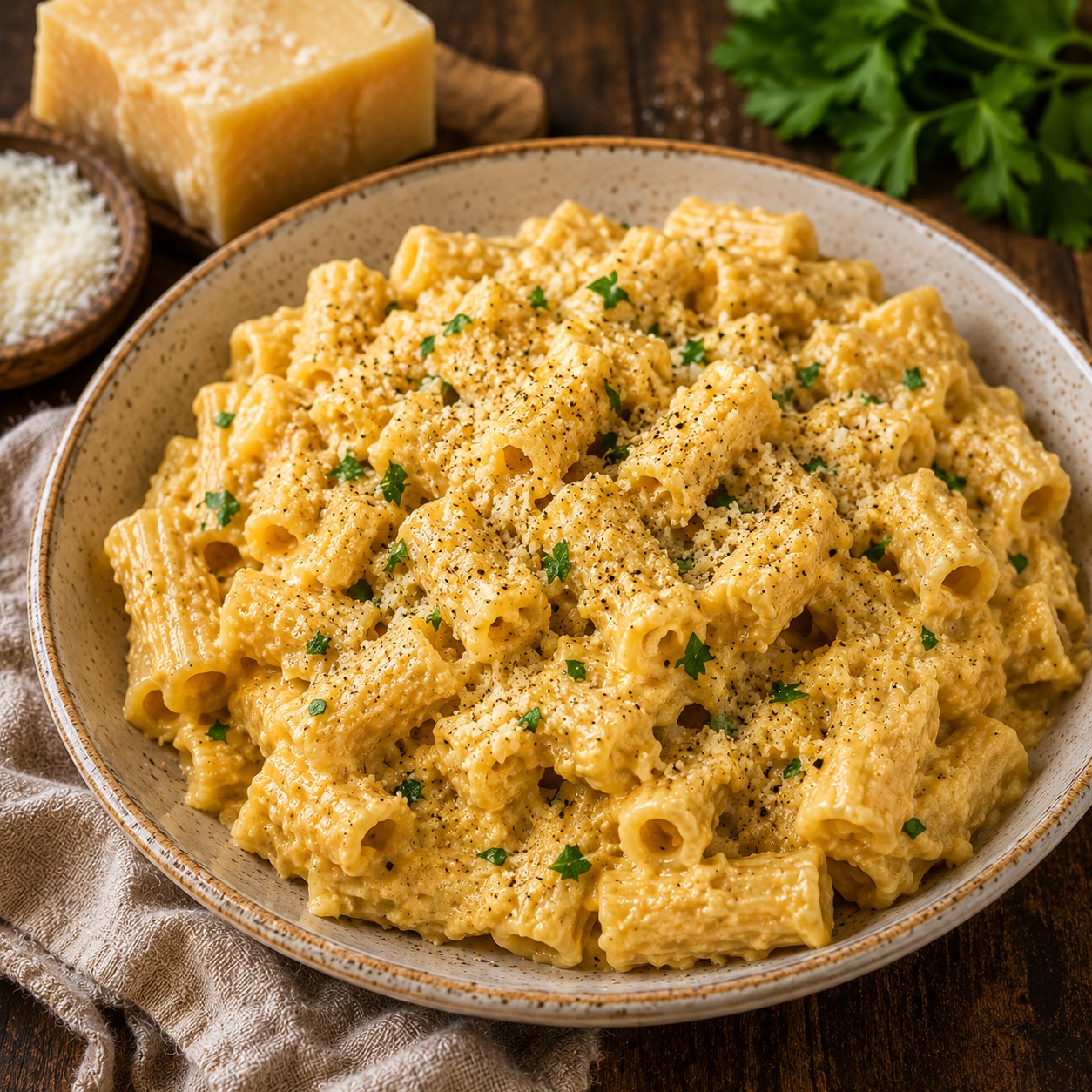
Not carbonara. Older than carbonara, simpler than carbonara, and less interested in being a technique than in being food. Eggs broken into hot drained pasta, cheese, black pepper. One pot, twenty minutes, done.
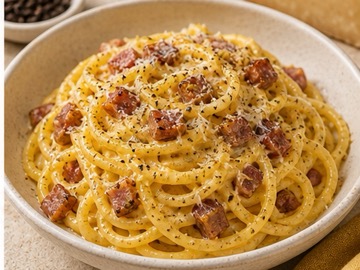
There is a version of this dish that has become famous, and it is not this one. Carbonara — made in Rome, with guanciale, egg yolks, Pecorino Romano, and a technique refined over generations — is the version that appears on restaurant menus and in cooking competitions and in long online arguments about whether cream is permissible. It is a genuinely excellent dish. But cacio e uova is something else: older, simpler, from a different tradition, and not concerned with any of that.
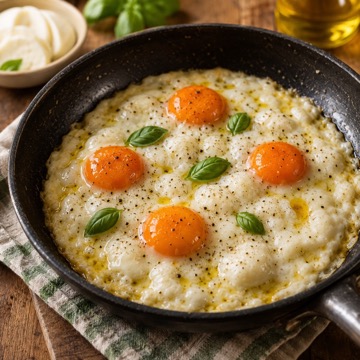
In Campania, pasta cacio e uova predates the modern carbonara by enough time that the question of origin is not interesting — they come from different ingredients and different circumstances. Carbonara uses cured pork fat as its foundation, and the technique of tempering the yolks off direct heat is central to the result. Cacio e uova uses no meat at all. It was a dish for fasting days in the Catholic calendar — the vigils before important feasts, the Fridays of the year, the forty days of Lent — when meat was prohibited but eggs and dairy were permitted. The Neapolitan dialect name, pasta cas' e ova, drops the letters without ceremony. You drained your pasta, broke eggs into it while still very hot, added cheese and pepper, mixed quickly, and the heat of the pasta cooked the eggs enough to bind into a sauce. The eggs come out more set than in carbonara — not scrambled, but not fluid either — and that is correct. It is how they are supposed to be.
I made this constantly when I was young, from the time I was living on my own, through graduate school in California and the years after. It was the answer to the question of what to eat when you were hungry, had thirty minutes, had pasta and eggs and some cheese, and did not want to think further than that. One pot for the pasta. Drain it. Crack the eggs in. Grate the cheese. Stir. Eat.
The infographic shows the more elaborate Neapolitan home version: a base of softened onion cooked in lard (la nzogna), into which the drained pasta is tossed before the egg and cheese cream goes in off the heat. This is the version as my grandmother's generation made it — the onion adds sweetness and body, the lard a depth that olive oil does not replicate. I grew up eating a simpler form: no onion, no lard, just the pasta and eggs and cheese. Quick, functional, entirely satisfying. Both are correct. The onion version is richer and more complex; the bare version is faster and more useful at ten in the evening when no planning has occurred.
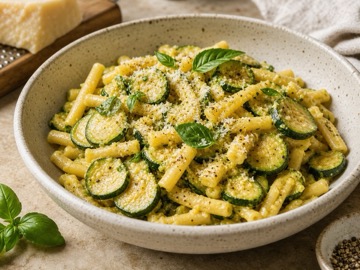
Long pasta is what I always used — spaghetti most often, sometimes spaghettoni or vermicelli. The infographic shows tubetti and short pasta, which is the more traditional Neapolitan form, and it works well — the egg-cheese sauce coats short pasta evenly if you toss it actively. I kept using spaghetti because it was what I had and because I prefer it. This is not a strongly held position. The pasta is not the argument here.
Egg proteins and pasta heat
The sauce works because egg proteins denature and coagulate progressively with heat. Egg white proteins begin denaturing around 60°C; yolk proteins start around 65°C. A freshly drained pot of pasta will be around 70–80°C — hot enough to begin setting the egg proteins, but not so hot as to scramble them instantly if you work quickly.
The starchy pasta water coating the strands is important: the dissolved starch acts as an emulsifier, helping the egg proteins and cheese fat bind into a cohesive sauce rather than separating. This is the same mechanism that makes pasta water valuable in many Italian sauces. It is also why keeping the pasta slightly wet when draining — not bone dry — produces a better sauce than draining completely.
Pecorino Romano is higher in fat and sharper than Parmigiano-Reggiano because it is made from sheep's milk with a different fatty acid profile, and aged with more salt. The combination of the two cheeses balances salt level and adds complexity. Using only Pecorino is traditional; using only Parmigiano is milder; using both is the practical answer that most Neapolitan home cooks land on.
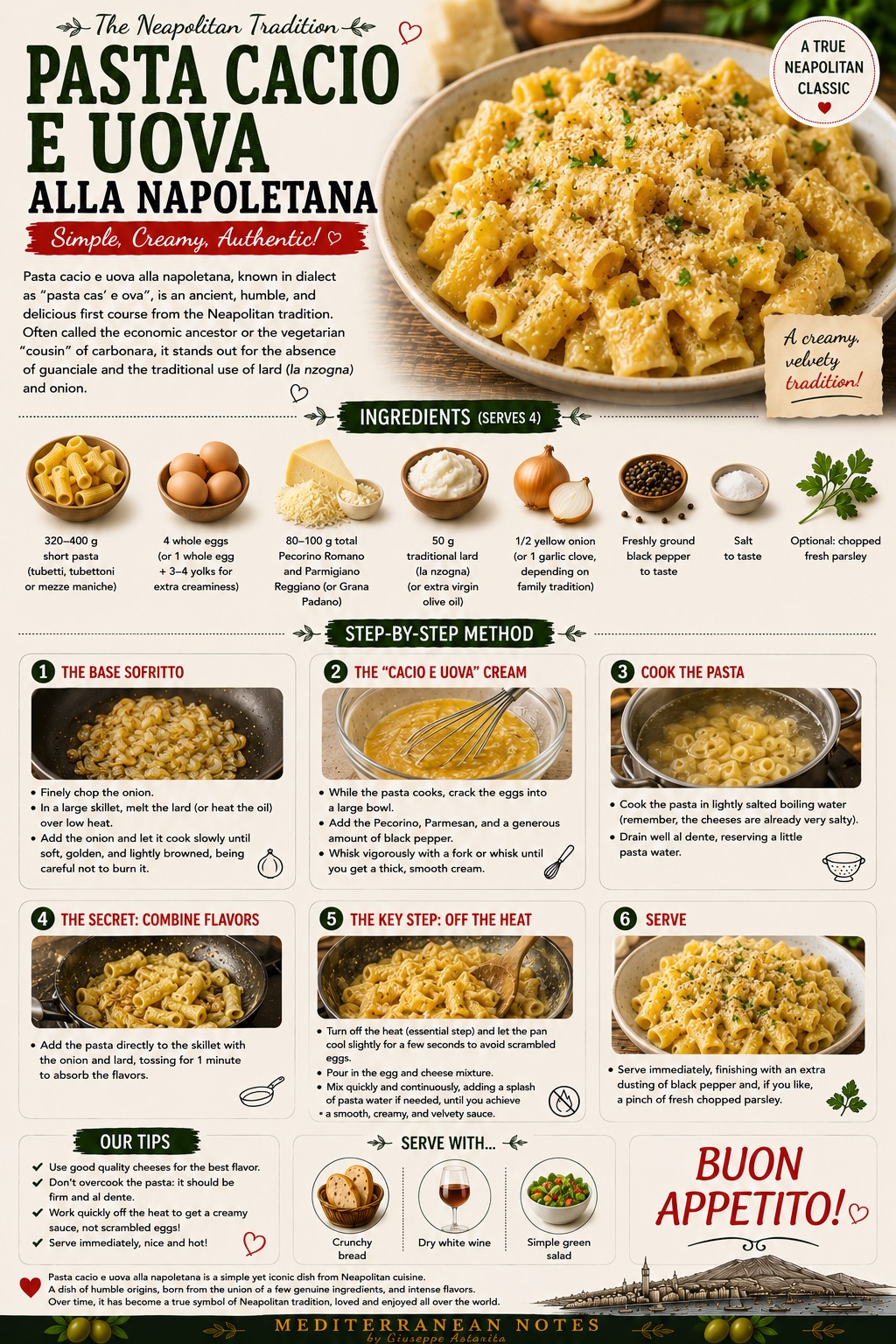
Tap to enlarge — Pasta cas' e ova: the full Neapolitan home method with onion base
Recipe — Pasta Cacio e Uova
Serves 2 · Ready in 20 minutes · One pot (simplified version) or two (with onion base)
- 200 g spaghetti or short pasta tubetti, mezze maniche, rigatoni all work
- 3–4 eggs whole; or 1 whole + 2–3 yolks for a richer result
- 50 g Pecorino Romano freshly grated
- 30 g Parmigiano-Reggiano or use all Pecorino
- Freshly ground black pepper generously
- Salt for the pasta water — well salted
- ½ small onion optional — for the traditional base
- 1 tbsp lard or olive oil for the onion base if using
This is a student's dish and a poor man's dish and a fast man's dish, and none of these are insults. It is also the dish that connects most directly to the long history of Campanian cucina povera — the cooking that did not have pancetta or guanciale, but had eggs and cheese and pasta and a pot of boiling water, and from those things made something that people ate happily for centuries before the carbonara was invented and will eat long after the argument about cream in carbonara is finally over.
I still make it. The technique has not changed. The eggs still go in immediately after draining. It still takes about twenty minutes and one pot. I do not think I have improved it since I was twenty and living alone and making it because it was what I had. Some dishes do not need improving. They just need making.