Frittata di Spinaci
A regular dinner at home — and better cold the next day
The frittata di spinaci appeared on our table often as a weeknight dinner — eggs, wilted spinach, Parmigiano, olive oil, nothing more complicated than that. My mother made it. It was not a special occasion dish; it was the kind of dinner that fed four people with whatever was in the kitchen. And it was good. Leftovers went into a panino the next day and were better cold than they were warm.
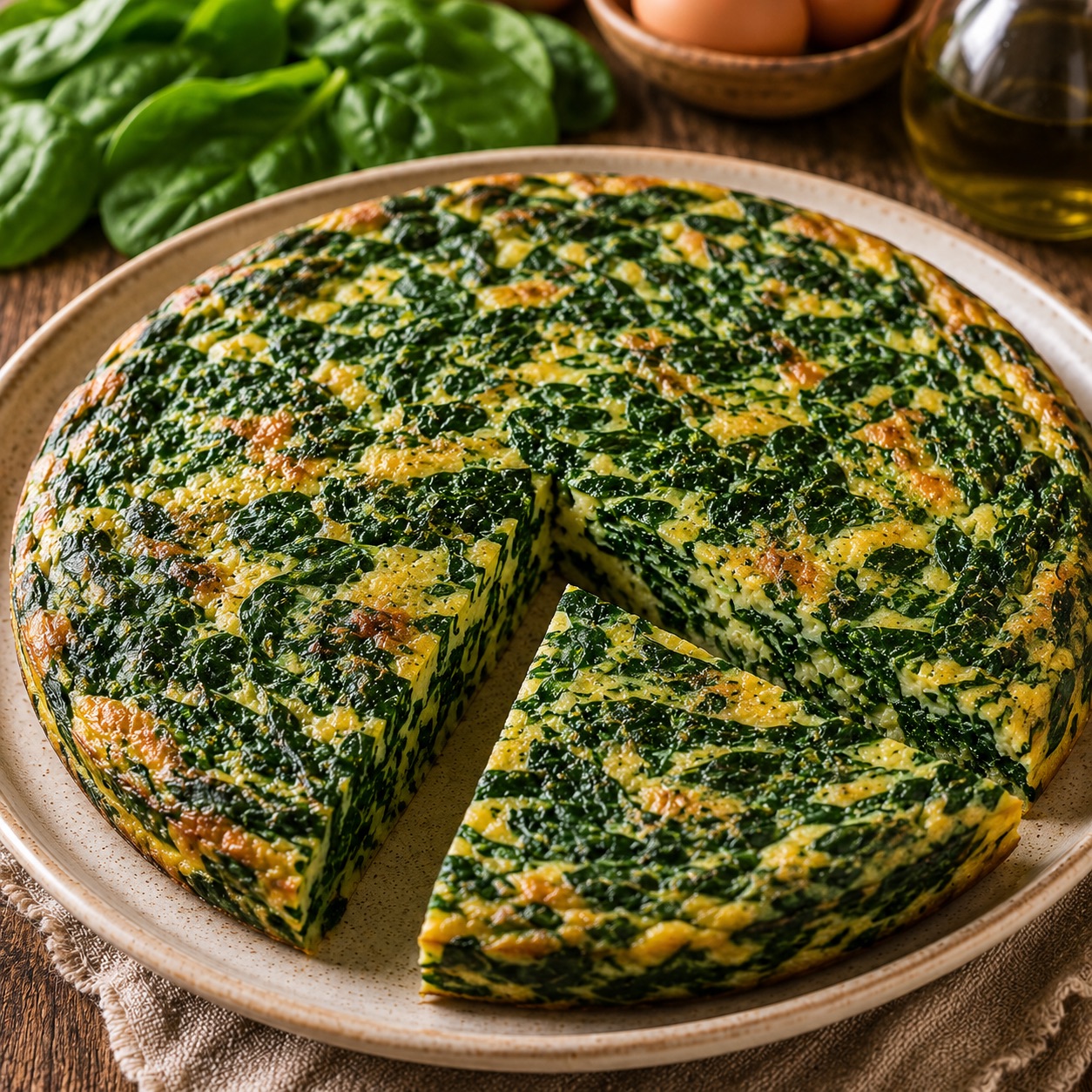
The Italian frittata is a fundamentally different object from a French omelette. An omelette is cooked quickly over high heat, folded while still soft inside, and served immediately. The frittata is cooked slowly over medium-low heat, flipped once, and served at room temperature. It is firmer throughout, more cake-like in structure, and intended to hold its shape when sliced. It is not a failed omelette or a braver version of one — it is something else, with its own logic and its own best use cases. The frittata travels. You can make it in the morning and eat it at lunch. You can make it at dinner and eat it for breakfast. You can put it in a panino and take it somewhere. The omelette cannot do these things.
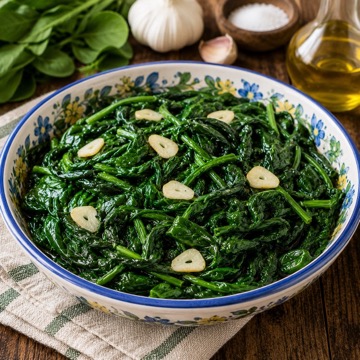
The spinach version was probably the most common frittata on our table, partly because spinach was always available and partly because the combination of spinach and egg produces something particularly satisfying — the slight bitterness of the greens against the richness of the egg, the Parmigiano adding the salty, nutty depth that ties everything together. The key steps are the same as for any dressed spinach preparation in this collection: cook the spinach with garlic in olive oil, squeeze out as much water as possible, let it cool before adding it to the egg mixture. Wet spinach makes a watery frittata; the squeeze is not optional.
Egg proteins — primarily ovalbumin, ovomucin, and ovotransferrin — begin to denature and coagulate at around 62–65°C. When heat is applied slowly and evenly, the proteins form a fine, tender network that holds moisture and produces the soft, yielding texture of a well-made frittata. When heat is applied too quickly — as in high-heat frying — the proteins coagulate rapidly and unevenly, trapping steam pockets and producing a tougher, more rubbery result. The cover during the first eight minutes serves two functions: it traps steam from the eggs and spinach, which helps set the top surface gently without requiring a flip, and it creates a more even heat environment inside the pan. The flip, when it happens, finishes the bottom crust without the top having been exposed to direct heat long enough to dry out.
The Parmigiano in the egg mixture contributes more than flavor: its proteins and calcium ions interact with the egg proteins during cooking, strengthening the protein network and producing a slightly firmer set that holds its shape well when sliced. This is why frittate with hard cheese are easier to slice and serve than those without.
The recipe
Serves 4. A 24–26 cm non-stick pan is the right size for 6 eggs. Do not rush the cooking — the low heat and the cover are the technique. The frittata is done when the edges are set and the center has only a slight wobble.
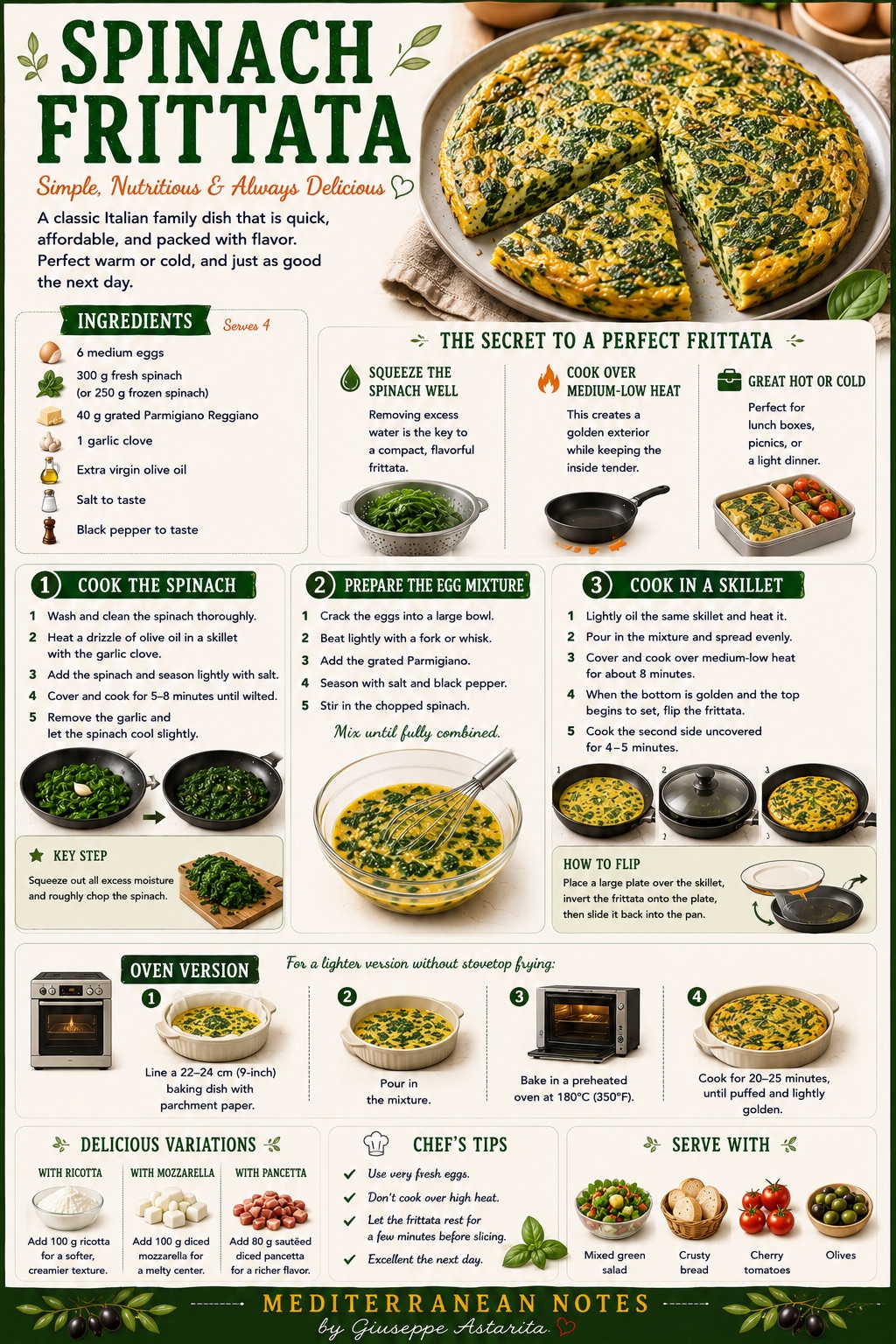
Variations: with 100 g of ricotta stirred into the egg mixture for a creamier, softer result. With 100 g of diced mozzarella for pockets of melted cheese in the center. With 80 g of sautéed pancetta or guanciale for richness. The spinach frittata accommodates all of these without losing its essential character — it remains a green frittata with eggs, and what you add changes the weight rather than the identity.
Buon appetito.