Friarielli all'Insalata
alla napoletana — the bitter green, dressed cold
Broccoli rabe — friarielli in Naples, rapini elsewhere — blanched for two to three minutes, cooled in ice water, squeezed gently, dressed with garlic, olive oil, and vinegar. The bitterness stays present and is the point. Better the next day.
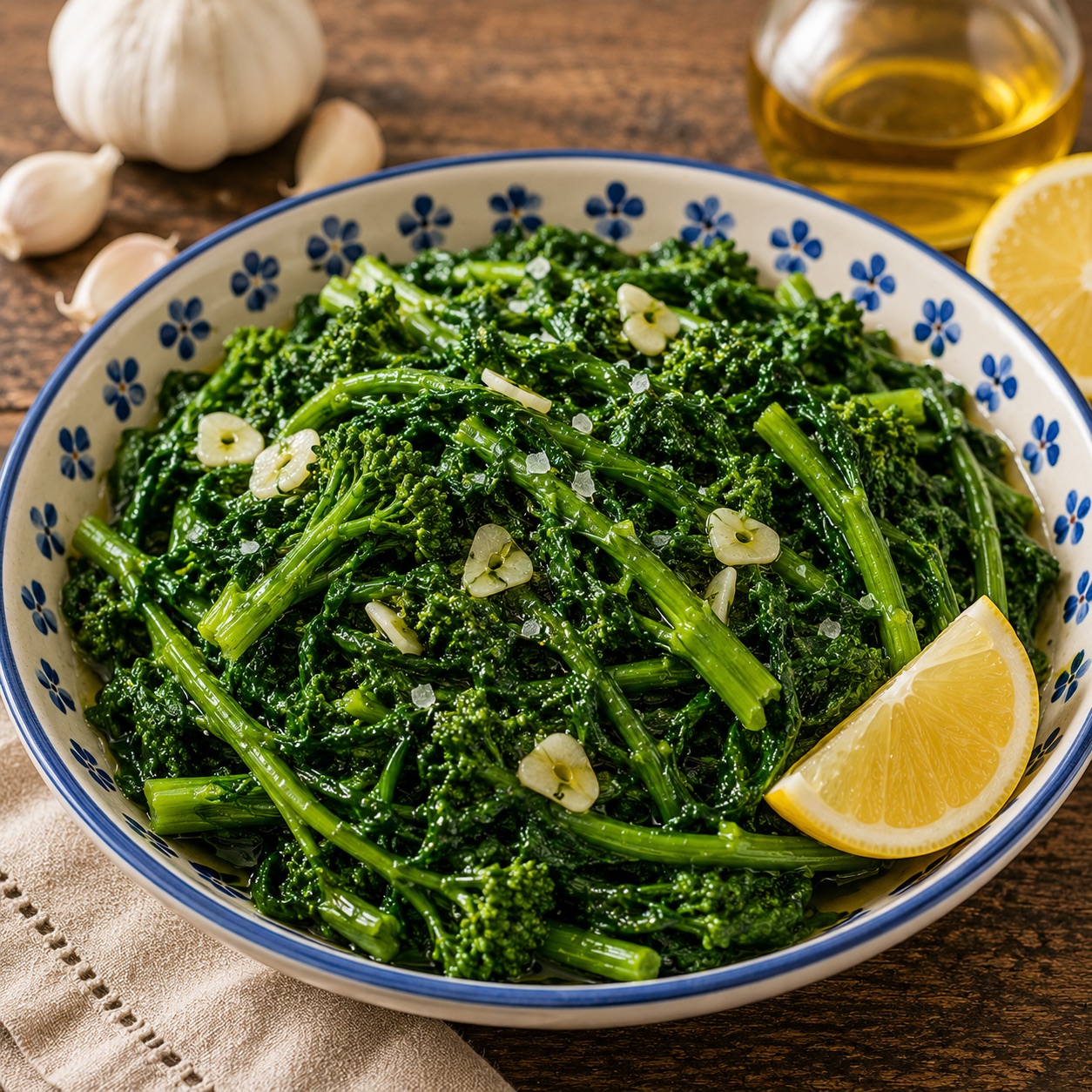
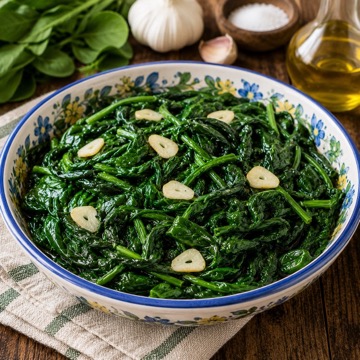
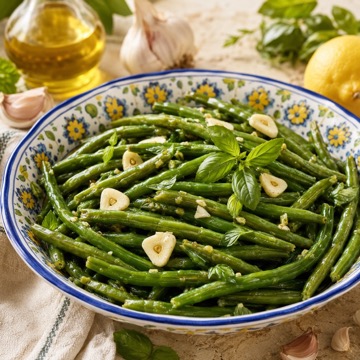
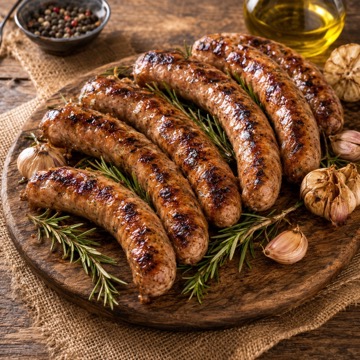
The friarielli is to Naples what the anchovy is to the Campanian sea — not merely an ingredient but a marker of identity, something that appears in enough recipes and enough meals to function as a flavor signature. In their sautéed form — the friarielli alla napoletana with garlic and chili that goes beside sausages or fills a panino — they are well known outside the region. But there is a quieter preparation that I ate just as often at home: the dressed version, blanched and cooled and treated exactly like the spinach or the fagiolini, with the same dressing of garlic, oil, and acid, and the same instruction to rest before serving.
The bitterness of broccoli rabe is its defining characteristic and should not be reduced beyond a point. Two to three minutes in boiling salted water is enough: the leaves and florets wilt, the stems soften slightly, and the color intensifies to a deep vivid green. More than three minutes and the bitterness begins to fade, the color to grey, and the texture to turn soft. The ice water bath is essential for the same reason it is essential with spinach and green beans: it arrests the cooking at the bright-green moment and fixes the color before it can convert to the dull olive of overcooked brassicas. The resulting dressed friarielli should be pleasantly bitter — not aggressively so — with the garlic and vinegar providing contrast rather than domination.
Broccoli rabe belongs to the Brassica family and contains glucosinolates — the same sulfur-containing compounds found in cauliflower, broccoli, and Brussels sprouts. When the plant tissue is damaged (cutting, chewing, cooking), an enzyme called myrosinase converts these glucosinolates into isothiocyanates and other breakdown products, some of which contribute to the characteristic bitter and slightly pungent flavor of raw and briefly cooked brassicas. Prolonged cooking deactivates myrosinase and continues to break down the bitter compounds thermally, producing a milder but also less nutritionally interesting result — some of the isothiocyanate breakdown products have documented anti-inflammatory properties. Brief blanching preserves more of these compounds while also softening the texture enough to be pleasant. The iron content of broccoli rabe — higher than most other greens — benefits from the same vinegar-and-acid dressing logic as spinach: the organic acids enhance absorption of non-heme iron by reducing it to its more bioavailable ferrous form.
The recipe
Serves 4. Use fresh broccoli rabe with deep green leaves, firm stems, and small flower buds. No yellow or wilted parts. The blanching time is 2–3 minutes — do not exceed it.
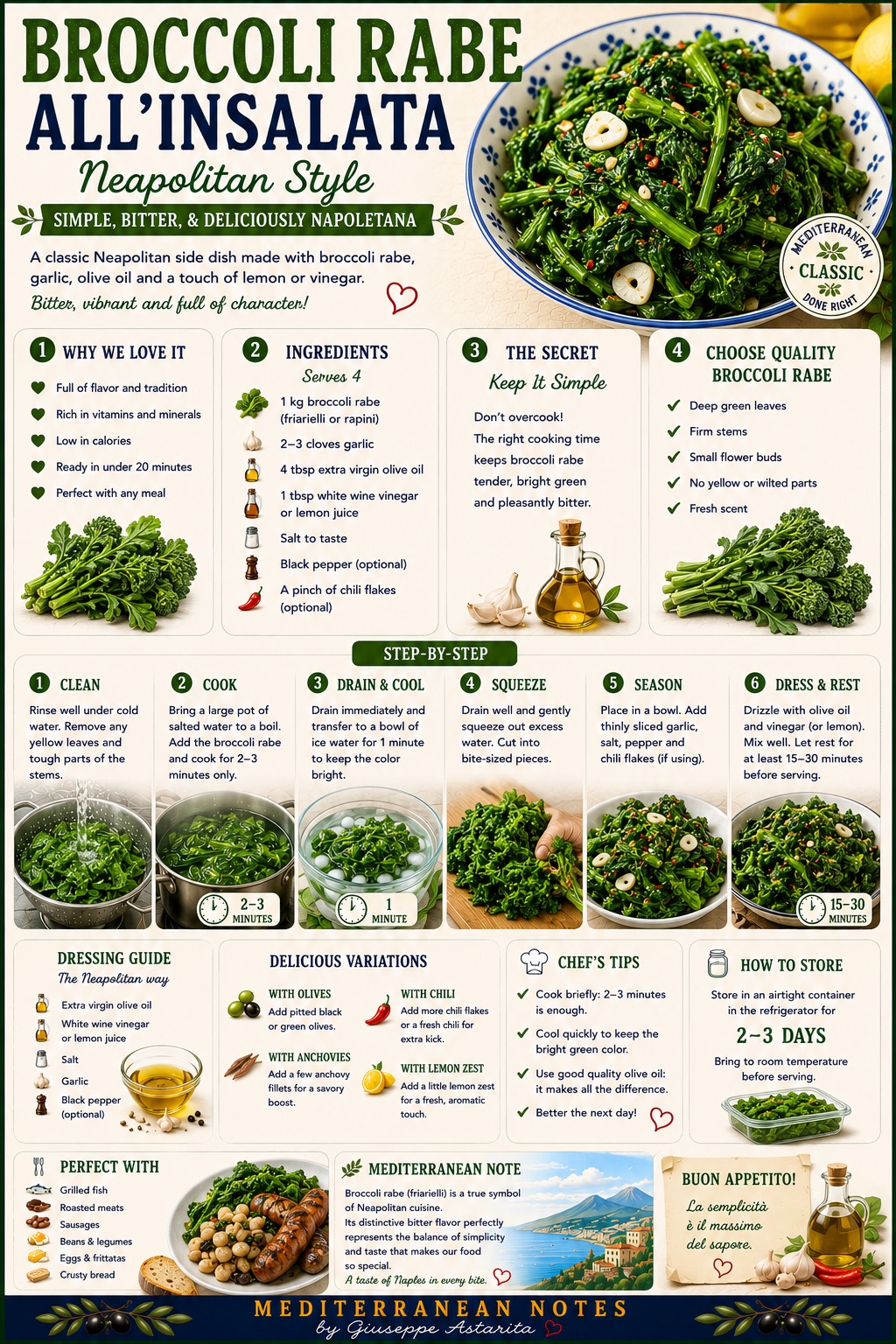
Better the next day, brought to room temperature and drizzled with a little fresh olive oil. A few anchovy fillets laid across the top add a savory depth that works very well with the bitterness of the friarielli — this is the same principle as anchovy with spinach or in the insalata di rinforzo.
Buon appetito.