Fichi in Campania
Two seasons, two traditions -- the fresh August fig and the dried winter fico bianco
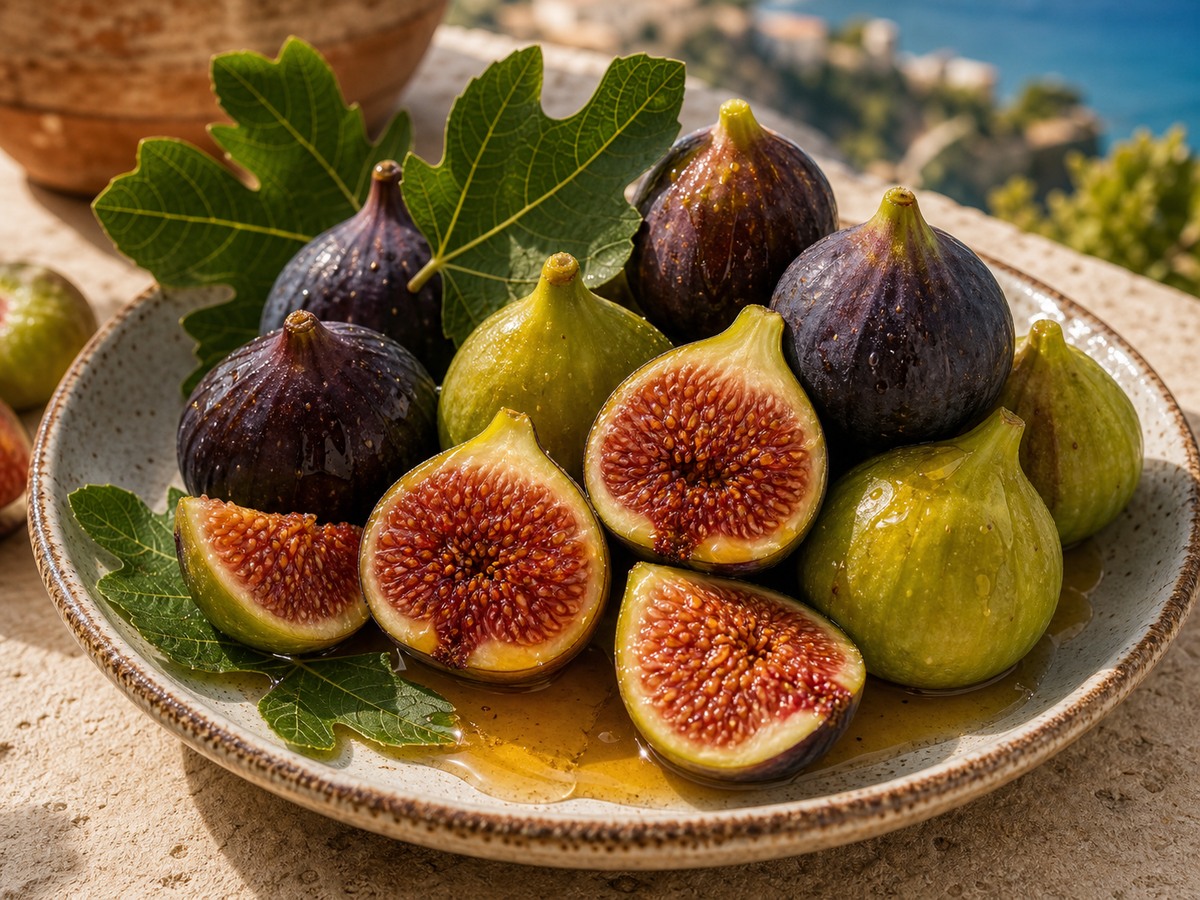
The fig in Campania has two lives, and they are completely different from each other. The first life is the fresh fig of August and September: intensely sweet, fragile, available for a window of a few weeks before it is gone. The second life is the dried fig of winter: concentrated, almost caramel-dark, stuffed with almonds or walnuts or fennel seeds and placed on the holiday table alongside the frutta secca in the long final stretch of the year from Christmas through the Epiphany. Same fruit, two entirely different ingredients, two entirely different occasions. The cultural rhythm of the fig in Campania follows the seasons of the year as closely as any ingredient in this collection.
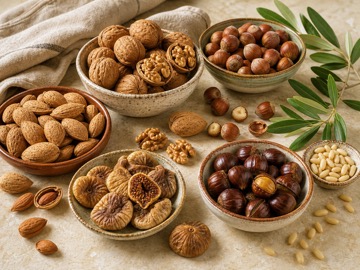
My father loved figs. Both forms, but especially the dried fig in winter was one of his favorites -- always on the table alongside the frutta secca, always reached for after the meal when the ciociole appeared and the conversation continued. The dried figs were often the Fico Bianco del Cilento DOP -- the white fig of the Cilento, traditionally sun-dried on wooden mats and then often stuffed with local almonds, walnuts, or wild fennel seeds. These are among the most specific products of the Campanian food tradition, known and protected under European designation of origin, and they are genuinely different from ordinary dried figs: lighter in color, more delicate in flavor, with a sweetness that is less aggressive and more complex than dark dried figs from other regions.
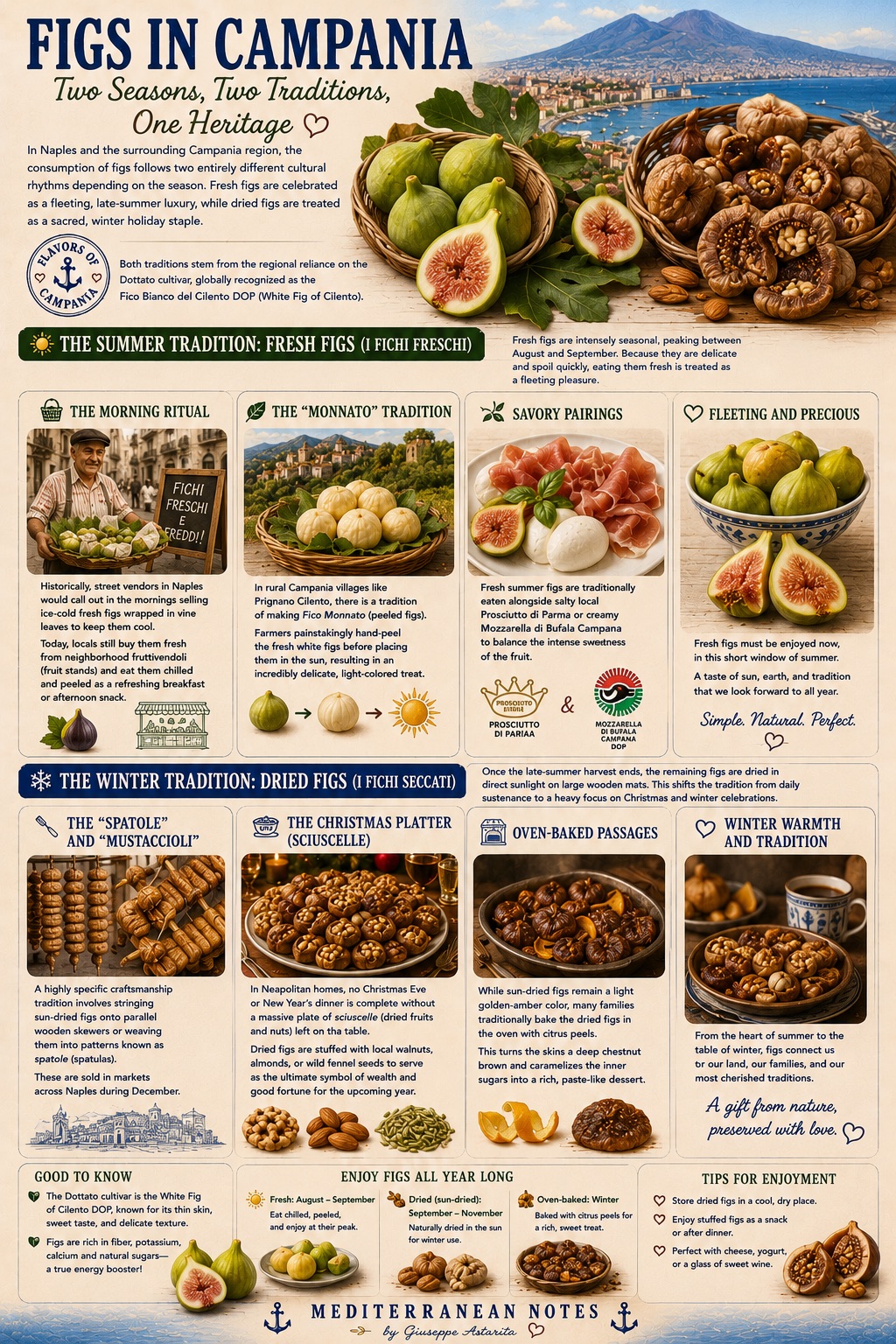
The fresh fig in summer was different -- common on our table during the season, eaten in the morning or as a snack or after lunch, with or without the green skin depending on the variety and the preference. The green skin of a ripe fresh fig is edible and slightly different in flavor from the red-pink interior -- the skin has a faintly tannic note that contrasts with the extreme sweetness of the flesh. My mother ate them with the skin. My father preferred them peeled. Both versions are correct. The flavor of a fully ripe fig in August -- taken from the tree or from the market when it has had the full summer to develop -- has almost no equivalent in the fruit world. It is concentrated, honeyed, slightly floral, and intensely itself. Nothing imported in December can replicate it.
The traditional Campanian preparation of dried figs for winter preservation involves stringing them on parallel wooden skewers or weaving them into flat discs called spatole. These were sold in December markets across Naples and the province. Some families also baked the dried figs in the oven with citrus peel -- a process that caramelizes the internal sugars further and turns the skin deep chestnut-brown, producing a pastry-like result that is eaten as a confection rather than simply a dried fruit. This oven-baked version, with the concentrated sweetness and the citrus perfume, is one of the most characteristically Campanian winter flavors and one that is almost impossible to find outside the region.
In Campania's Christmas tradition, no holiday table is complete without the plate of sciuscelle -- dried fruits and nuts -- which always includes the dried figs alongside walnuts, almonds, and hazelnuts. The fico bianco stuffed with almonds is the centerpiece: opened carefully, the two halves of the dried fig revealing the almond inside, eaten slowly. A fruit that carries the whole summer inside it, preserved and transformed by the autumn sun.
Buon appetito —
dal fico fresco di agosto al fico secco di dicembre.