Cavolfiore all'Insalata
The simple version — garlic, olive oil, vinegar, nothing more
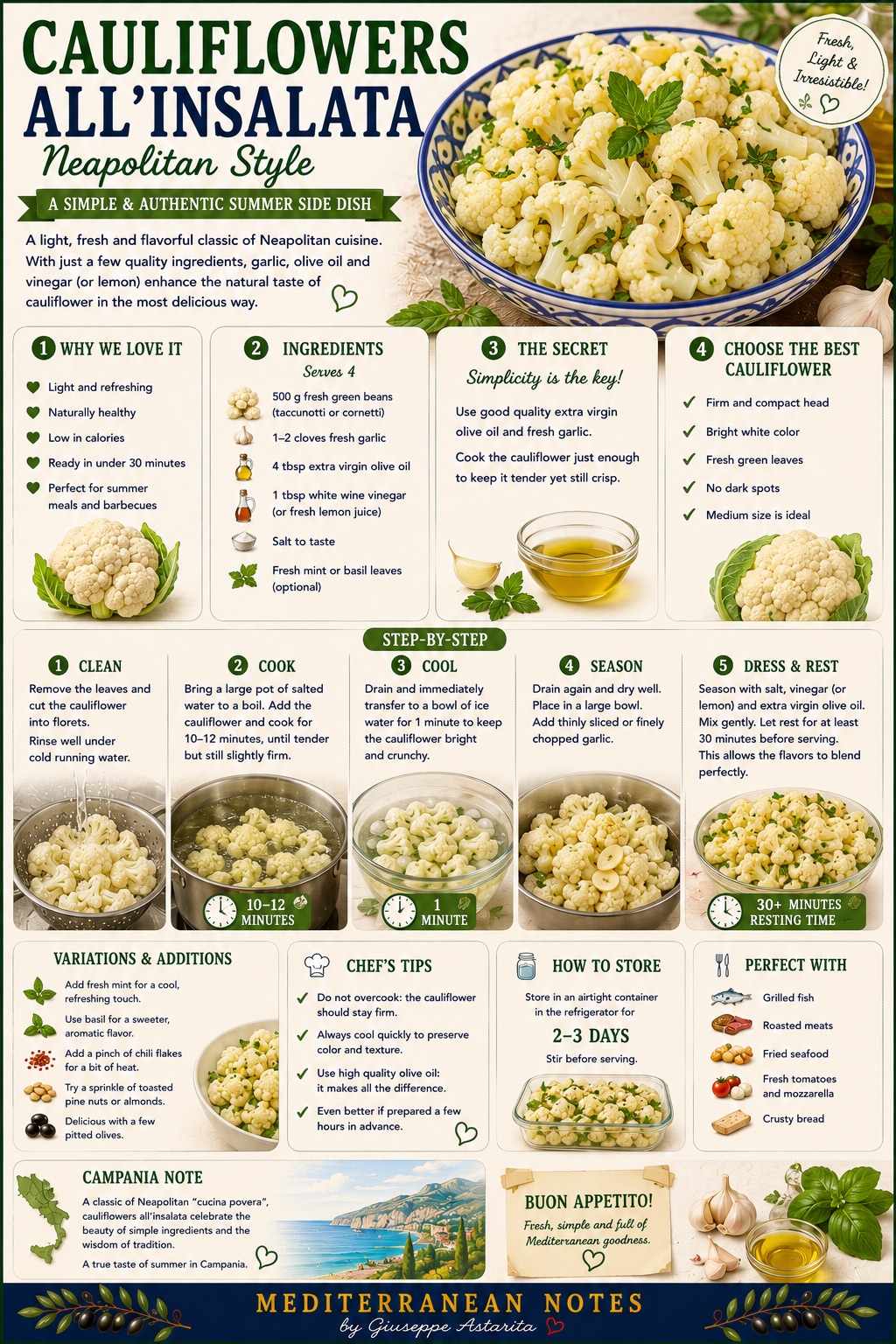
Cauliflower boiled until just tender, cooled quickly, dressed while still warm with thinly sliced garlic, good olive oil, and white wine vinegar or lemon juice. Simplicity is the whole point. Let it rest before serving.
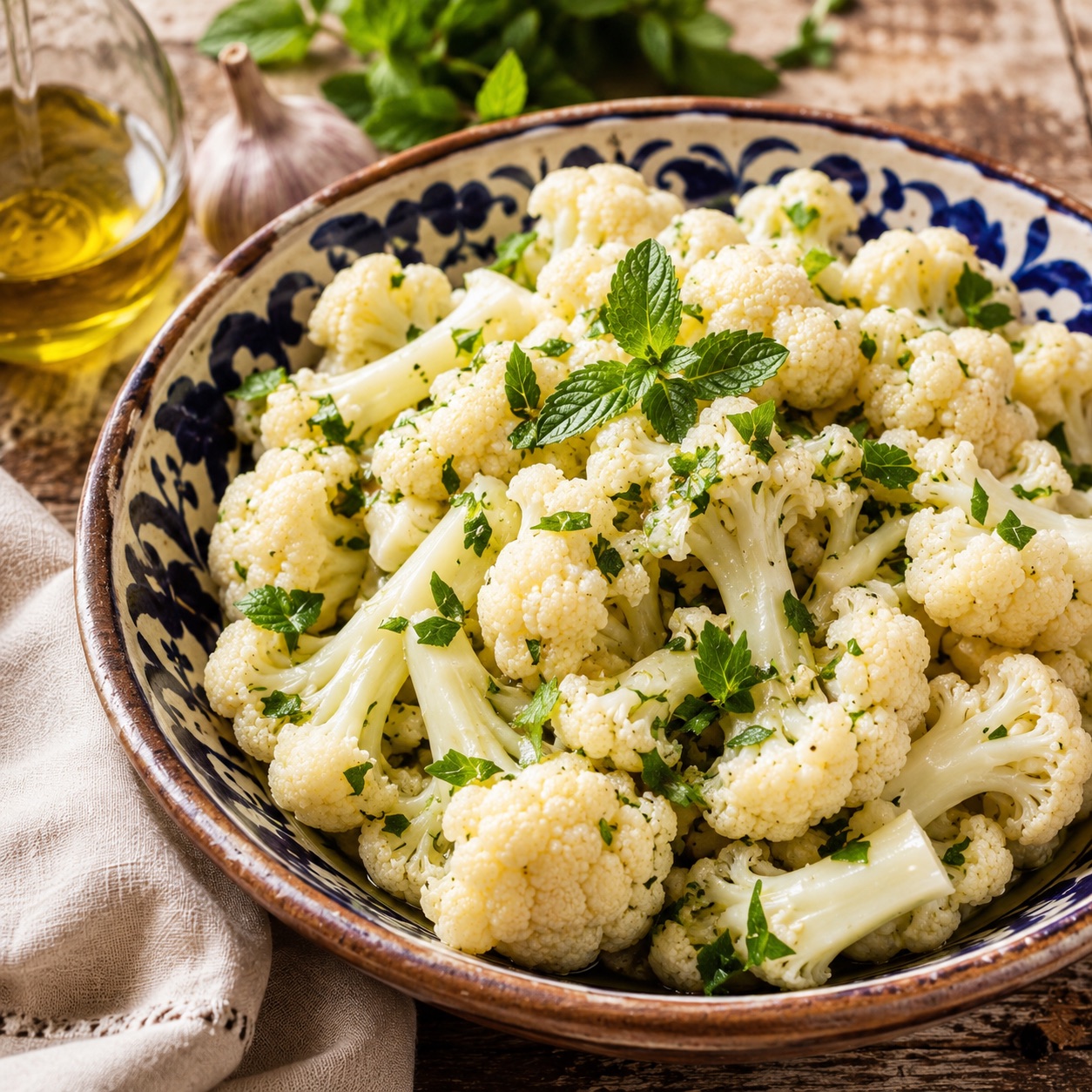
This is the most stripped-down version of a family of dressed vegetable dishes that appears throughout the Neapolitan kitchen. No tomatoes, no olives, no capers — just the cauliflower and the dressing, which is the standard one: olive oil, garlic, acid. The result depends almost entirely on the cauliflower and the olive oil. Use a good cauliflower — firm, white, no dark spots — and a Campanian olive oil if you can find it. The mild sweetness of well-grown cauliflower is the thing the dressing is meant to enhance, not mask.
The dish requires patience in one step only: the cooling. Cauliflower dressed while very hot absorbs the vinegar aggressively and loses its structure. Cooled to room temperature or just below, it absorbs the dressing more gently and the texture holds. The rest period after dressing — at least thirty minutes, ideally more — is when the garlic and vinegar settle in and the dish becomes coherent. Eaten immediately after dressing it tastes unfinished. Given time, it tastes right.
Cauliflower's cell walls contain pectin, which softens progressively during cooking as water penetrates and the pectin-calcium bonds that hold the cells together weaken. The window between under-cooked (chalky, resistant) and over-cooked (soft, grey, sulfurous) is narrow — about 2–3 minutes at a rolling boil for standard-sized florets. Testing with a fork is more reliable than timing. The floret should be easily pierced but spring back slightly, not collapse. Immediate cooling in cold water arrests the pectin breakdown at this point and preserves the texture through the rest period.
The recipe
Buon appetito.